

The figures are amazing and appalling, with huge implications for freedom of expression in the UK.
New data released following a Freedom of Information Act (FOIA) request show that prosecutions for real “child sexual abuse images” in the UK have fallen by more than half since 2017, even as cases involving purely fictional or AI-generated material have surged to nearly 40% of all image offences. The information is drawn from the CPS Case Management Information System.
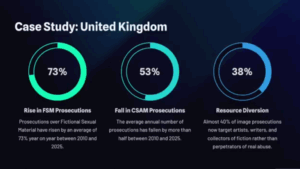
Who is telling us? The new and ambitious California-based Center for Online Safety and Liberty (COSL). The revelations were announced this week at a webinar to launch a 62-page report called Drawing the Line: Watchlist 2025, which surveyed the law and current developments in 10 countries, from major Anglophone ones (Australia, Canada, UK, USA) to more linguistically and culturally diverse places (Costa Rica, Denmark, France, Iran, Japan, South Korea).
Heretic TOC was among the 30 or so participants who had a virtual presence at the event, as was Bly Rede, of Virtuous Pedophiles. Not that any other MAP engagement was discernible. COSL has a finger in many pies, describing itself as a “nonprofit acting as the parent entity for multiple independent projects aligned with our mission, to empower individuals and communities to thrive online by building safer spaces, fostering creativity, combating harm, and championing digital rights and freedom”.
If that sounds bland, bureaucratic, and vague, it could be because the organisation’s Chair, Jeremy Malcolm, is a savvy human rights lawyer branding himself as a respectable “trust and safety consultant” He doesn’t want to frighten the horses. Understandably so. His last venture, the Prostasia Foundation, was wound up in September after drawing too much flak from hostile forces, as reported by Strat and Prue in HTOC’s comments space.
There’s nothing bland about Watchlist 2025’s most striking finding, though, which would be a genuine scoop if the media were interested in anything beyond paedo-bashing.
In the Q&A chat space available during the presentation, I asked whether those involved with Drawing the Line have any idea why there is such a strong trend towards prosecutions for fictional sexual material (FSM, in the ever-expanding jargon) rather than images of real children. Had policing the internet been so successful that such images have become much harder to access?
Malcolm answered, saying their hypothesis is that law enforcement resources are limited, in the UK and elsewhere, meaning there is always a backlog of images to be processed, “so virtual content displaces real content”. This could make sense if “processing” images of real children is much more time-consuming than processing FSM, but it is not obvious why this would be so. The main element of processing is inspecting the material and deciding whether it is illegal. In both cases the bar is set very low, making the police and prosecutor’s case relatively simple.
VirPed’s Ethan Edwards had a different explanation, one that I found somewhat more persuasive, when the headline figures were announced by Malcolm on Sexnet, along with the invitation to the webinar. Ethan wrote:
It isn’t news that if you give an agency money to address problem X but they can’t find a way to spend it to effectively combat X, they will look for a related Y and spend the money on that instead of leaving the money unspent. Michael Seto in “Internet Sex Offenders” implied this regarding child protection money (in Florida, I think) being spent to go online and impersonate young teen girls looking for sex with men.
So if the money spent to catch those with fictional material yields a higher rate of return (there’s likely some low-hanging fruit if it just recently became illegal), then it will be natural they will spend the money that way.
I also asked whether Drawing the Line was aware of any current research on the positive benefits of FSM, pointing out that plenty of research has been done in a number of countries, including Denmark, the Czech Republic and Japan, showing a strong association between the easy accessibility, not that long ago, of child porn and a reduction in sex offending against children. Those studies showed a clear, consistent correlation, but was there any work that might show a causal connection?
Malcolm replied that such research had indeed been considered but said it hits the buffers on ethical grounds. Why? Well, you’d need an experiment with say a thousand convicted hands-on sex offenders. You would exempt them from the porn laws, giving them unlimited access to child porn (as hard-core as they wanted) and compare them at the end of, say, a five-year period, with a thousand similar offenders who were not given this privilege. If the porn access group offend at a significantly lower rate than the non-access group in this period, and possible confounding factors are controlled for, then your hypothesis stands up and you have a valuable new finding.
I say, what’s not to like about that? But apparently research ethics boards might see some pettifogging downside that presently escapes me!
There’s plenty to ponder in Watchlist 2025, believe me. Heretics here can catch up on all this in more detail by downloading the full report or by listening to a recording of the webinar. There is also a background paper on the principles guiding Drawing the Line. The basics are captured in the infographics presented in the webinar, some of which are incorporated in this blog, including a set of recommendations aimed mainly at governments.
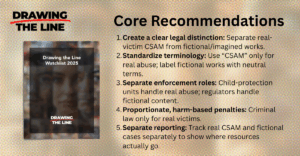
In addition to an admirably well-prepared and clear presentation on Watchlist 2025 by Jeremy Malcolm, the webinar included searching questions put to three guest speakers by his co-host Brandy Brightman, described at COSL as having a long involvement in online communities and a background in the tech sector.
The panellists included Emma Shapiro, editor-at-large with Don’t Delete Art, which tackles online art censorship. Shapiro is an artist herself, but my eye was taken by another name on the organisation’s team: Spencer Tunick. Regrettably, I don’t know much about contemporary artists, but this guy is someone I had certainly heard of. He is the very high-profile photographer who made a name for himself doing mass nude photoshoots in prominent public places, including one event when about 18,000 people posed for him naked in Mexico City’s principal square, the Zócalo.
The other speakers were Ashley Remminga, a “scholar of transgender participation in fandom”, and Zora Rush, described as a “responsible” (i.e. ethical) AI expert – despite working for Microsoft, which is not everyone’s idea of an ethical company.
Nevertheless, of the three guest speakers, I felt that Rush, working as a linguistics specialist on the interpretation of human language by AI, was the most well placed to address where things are heading, at least as regards how Silicon Valley is thinking about such problems as heavy-handed algorithmic content moderation, American cultural bias over alleged unacceptable content, and so on. The answers were mildly encouraging if on the thin side, but I wouldn’t fault any of the speakers for the paucity of solutions: the online world is still in its infancy compared to printed communications, and everyone is struggling with the dizzying pace of tech developments and the awesome power of the big platforms’ billionaire bosses.
But the report, Watchlist 2025, is a richly informative document, a model of clarity, and a source of carefully considered, positive proposals, reflecting the obvious fact that although COSL is a new venture, it appears to have inherited a great deal of expertise and projects in progress from Prostasia. It is not starting from Ground Zero. Far from being left only with smoking rubble when that organisation was nuked, there has been an impressively nimble, well-resourced rebuilding and rebranding.
Yet as I write, I can almost hear the cynical scoffing of the naysayers, prompted precisely by this seamless continuity from one organisation to the next. COSL, they will say, has learnt nothing. It is simply repeating Prostasia’s mistakes and is inevitably destined to suffer the same fate. Yes, COSL is less obviously MAP-adjacent, but it won’t take long before the haters out it as a MAP-front operation – although that would be wide of the mark because COSL seems to be more in bed with the “abuse” prevention people than with MAPs per se.
One of the naysayers, though, has an interestingly different critique. This is Kit, occasionally of this parish, who wrote on BoyChat after Prostasia put up the shutters:
The problem with Prostasia was not a “persistent wave of misinformation and smear campaigns”, but rather the contradictions and logical contortions of their own position.
Prostasia wanted to be “pro-sex” – an astonishingly vacuous posture – while also being “anti-abuse.” It wanted to be liberal and censorious, permissive and forbidding, libertarian and (as its own name suggests) paternalistic.
Prostasia was tripped up by its own muddle-headed ideology – its antithetical commitment both to sexual liberation and to abuse prevention – but it is hardly alone in this. Prostasia’s confusion is the confusion of the liberal sexual ethic in the West more generally.
Our culture is torn between the libidinous dream of an innocent sexual pornutopia on the one hand, and on the other the terrorising nightmare of vampiric male sexual aggression.
There is simply no way that perverts can negotiate their way into this contradiction. And I really wonder why any of us would ever want to.
Do I agree with this eloquent tirade? A bit. There is certainly a case to be answered. The key contradiction Kit identifies is right there in the name: the Center for Online Safety and Liberty. Are liberty and safety compatible? I would say there is an unavoidable tension between the two, but that is not the end of the story. Life is often about balancing pressures and finding the least uncomfortable way to live with the pros and cons of competing values. Or to use COSL’s own metaphor, lines must be drawn between the acceptable and the unacceptable.
As Kit rightly pointed out, the name Prostasia has paternalistic overtones. The name comes from the Greek word for “protection”, signifying, as the organisation candidly said, that “we are a child protection organization”. Nothing wrong with that. The protection of children from real harms, such as exploitative child labour, with exposure to long hours, dangerous machinery, etc., or to non-consensual sexual assault, is a worthy aim. To me, though, the name Prostasia suggested “pro the Stasi”, thanks to their seemingly uncritical support, along with the VirPeds, for an intrusive, surveillance-led, law-enforcement regime hell-bent on giving so-called “pro-contact” MAPs a hard time no matter how good their relationship with a child might be.
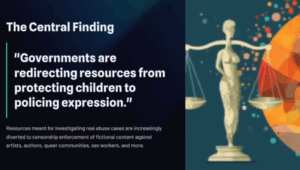
Whether on balance we feel COSL, and more specifically the Drawing the Line: Watchlist 2025, is doing a good job, should be seen, I believe, in the light of its work rather than its title, or questionable elements of its mission statement. With that in mind I will leave you with a key paragraph from the report itself, in the Executive Summary of Watchlist 2025. Ask yourselves whether this finding is an important one, worth the effort of establishing its reality? I suggest it is hugely important, but you will make up your own minds. Here goes:
The core finding of the Watchlist is the identification of a dangerous legislative trend: the blurring of the essential legal distinction between content that records or causes concrete harm to real children, and content that is purely fictional, artistic, or imaginative. By treating fictional works — such as drawings or stories that evoke taboo themes — the same as evidence of real abuse under the single umbrella term of CSAM, the global response is expanding state power and sacrificing core liberties.
HONOURING THE LATE GREAT KENNEDY
No, not the assassinated US president but the distinguished American mathematician, biographer, translator, and pioneer gay activist Hubert Kennedy, who died last month aged 94.
My personal reason for honouring his memory is that he contributed a glowing review of my book Paedophilia: The Radical Case in The Advocate and also wrote a four-page foreword for the paperback edition in 1982 in which he dared to agree with my main controversial arguments, notably saying he thought I was at my best on consent, and that I made a “convincing case that the powerful side in a paedophilic relation is not automatically, or generally, the adult”.
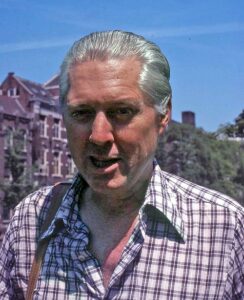
MAPs can also thank him for his translations of boy-love novels by the German anarchist writer John Henry Mackay, and gays more widely are in his debt for his biography of the German jurist and pioneering gay liberationist Karl Heinrich Ulrichs.
Even his day job as a professor of mathematics turns out to include something of interest for those of us who might be triggered by trigonometry and terrified of topology. Kennedy appears to have been the first western scholar to have studied the mathematical manuscripts of Karl Marx, after their first publication in the Soviet Union in 1968.
Maths? By the author of The Communist Manifesto and Capital? Who knew? But it’s a fact, folks. The old revolutionary left a thousand pages, no less, of mathematical notes aimed at establishing the foundations of calculus. Kennedy concluded that Marx’s work in this field was less earth-shattering than his contributions to revolutionary politics, but he did make some “independent discoveries” and anticipated some 20th century developments in maths.
Kennedy also worked on theoretical genetics and provided a mathematical proof of the impossibility of an organism that requires more than two sexes in order to reproduce – but queer theorists might not thank him for this one!
I might just add that Kennedy’s death came to my attention thanks to a couple of projects I have been involved with lately for new editions of Paedophilia: The Radical Case. These are an edition in German and an audio version. Neither was my own idea. Both were initiated by MAP activists. Delighted by their proposal of such useful projects, and their commitment to putting time and thought into the practicalities, I had no hesitation in deciding to help where I could.
On the audio front, tests have already been run using my voice and some AI ones as the basis for the narration of the book. I was hugely impressed by one of the AI voices on offer – not only a beautiful timbre but a good variation of pace and tone that matched the meaning very well, making the whole thing clear, pleasant to the ear, and easy to understand. My own reading, by unflattering contrast, included an element of slurring and stumbling, despite my best and most sober efforts.
Our provisional conclusion is that I should be the reader for the Preface, just for a sense of authenticity: some readers may wish to find out what the actual author sounds like. The rest of the book, however, is likely to be in a splendidly sonorous AI voice, which I suppose has been trained on readings by top quality professional actors.
As for the German edition – well, for both editions really – I will be writing a new introduction, or foreword, of some sort. My first thoughts along these lines naturally took me back to Hubert Kennedy’s foreword, which led me google him and discover he is no longer with us.
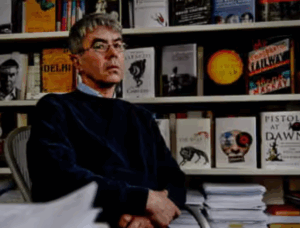
I was also reminded of an afterword to the paperback edition written by Dan Franklin. Dan had been the commissioning editor of the hardback two years earlier, in 1980. He had written to me out of the blue at the time when PIE, and my leadership of the organisation, were very much in the news. Working as an editor with Peter Owen Publishers, London, he invited me to write a book on paedophilia as one of the company’s titles. And lo, it came to pass.
What I did not know at first was how lucky I was to have Dan as my editor, but I soon discovered he was a great guy, easy to get on with, and with lots of good advice on the writing. He was a young man then, in the early days of his publishing career. It was no surprise to me that he would do well in the business, but even with my insider knowledge I could not have known just how well.
Dan rose to become one of the most influential figures in British publishing. Described in The Guardian as “the publishing colossus behind Britain’s superstar authors”, as publishing director with Jonathan Cape Ltd he brought out the novels of prize-winning, best-selling writers including Salman Rushdie, Martin Amis, Julian Barnes and Ian McEwan. He also secured the rights to Michael Jackson’s Moonwalk and published Thomas Harris’s blockbuster, The Silence of the Lambs.
Strikingly, though, Dan is all too aware that publishers these days are finding it much tougher to take risks by publishing controversial books such as Lolita (and of course mine!) Emily Mortimer spoke to him for an article in The New York Times on cancel culture. She said:
It wasn’t just me concerning myself with the question of whether Lolita would find a publisher today. Dan Franklin, who published Ian McEwan and Salman Rushdie at Jonathan Cape, has speculated on the subject too: “I wouldn’t publish Lolita. What’s different today is #MeToo and social media – you can organise outrage at the drop of a hat. If Lolita was offered to me today, I’d never be able to get it past the acquisition team – a committee of 30-year-olds, who’d say, ‘If you publish this book we will all resign.’”
THE HORROR, THE HORROR
Kurtz’s dying words, familiar from Francis Ford Coppola’s film Apocalypse Now and the novel that inspired it, Joseph Conrad’s Heart of Darkness, evoke real horror, truly horrible horror. Not that we need fiction to tell us what real horror is when Gaza, Ukraine, and Sudan remind us daily.
By comparison, some of the alleged abuse horrors we are now hearing about would seem comically benign if it were not for the genuinely awful and undeserved fate that tends to befall the alleged abusers.
We’ve had a classic example this month in the case of nursery worker Vincent Chan, who filmed himself in sexual acts with children. The word “horrific” appears in the Yahoo News version of the story no fewer than four times to describe what happened, which appears to have been no more than touching and mild penetration of some sort – by a tongue, perhaps. He was not charged with rape or attempted rape, as he surely would have been if he had been at all forceful or unpleasant with these little kids. Also, backing my interpretation, he had worked at the nursery for nearly seven years without any suggestion that any child had complained about him, or that he was anything but well liked.
Yet his behaviour was described as “horrific” – and also “callous”, “cruel”, “predatory”, “sickening”, “despicable”, “appalling”, “devastating”, “a violation”, and “a betrayal”.
What brought about his downfall, bizarrely, was when a member of the nursery staff reported that “he had callously filmed a child falling asleep in their food and set it to music, before showing the clip to a colleague”.
Callously? Isn’t this the sort of clip most people would think was cute if they saw it on TikTok or YouTube? Chan seems to have expected, not unreasonably, that his fellow nursery worker would be amused, not horrified. Others might have seen the funny side, but the poor guy had the bad luck to show it to someone without a sense of humour.
Or perhaps someone who had long had their suspicions about Chan but had nothing else to go on. If so, it was a hunch the police shared, because their investigations took them to his incriminating photos and videos. We can only speculate as to what these images depicted, but we can be sure of one thing: when Chan’s case comes up for sentencing, scheduled for January, the outcome for him will be truly horrific.
SALLY MANN’S LAWYER DAUGHTER
Sally Mann, the American artist whose photos of her own children sparked a huge controversy in the early 1990s when they were published in a book called Immediate Family, turned up recently as the guest on Radio 4’s Desert Island Discs (DID).
Many heretics here will remember the fuss, and may have bought the book. No fewer than eight images in it that she had chosen for a travelling exhibition “could subject her to arrest” according to a federal prosecutor, because they showed the kids in varying degrees of nakedness. But she dodged the bullet. No arrest, no legal trouble. The attempt to brand her a pornographer failed. Instead, it propelled her into instant fame and fortune, and her reputation as a photographer has only grown over time, although as recently as this year her photos were “cancelled” – removed from an art gallery exhibition in Texas.
Those who saw the book will remember the setting, I’m sure. The three kids appeared to be enjoying a beautifully free, feral childhood on a sprawling farm with wide acres of land to explore in rural Virginia in the foothills of the Blue Ridge Mountains and no one nagging them to keep their clothes clean or stop them climbing trees or skinny dipping in the river – certainly not Sally, their “mountain mama”!
It all looked very hillbilly, from the beat-up pickup truck to the wooden farmstead to the wildlife – the kids with squirrels, weasels, dogs, and even a just-hunted deer with its throat cut. There’s lazy living in the heat of the summer, the kids lounging naked on a scruffy, ramshackle veranda where we wouldn’t be surprised to see a good old boy in dungarees with a banjo on his knee and “the misty taste of moonshine” on his lips.

But appearances can be deceptive. This is no dirt-poor hick family eking out a left-behind, no-hope existence. Sally’s father was a country doctor. Both her parents were artistic intellectuals. These kids grew up with the benefits of bourgeois resources combined with bohemian freedom and culture.
Accused of being a bad mother, blighting her children’s future lives and prospects, she can be proud that her two daughters are doing very well. Jessie is herself an artist now, with a PhD in neuroscience; Virginia is a lawyer in New York. Both have their own thriving families. And who knows what her also promising son, Emmett, might have achieved but for a tragic accident that led ultimately to an early death?
And if the “New York lawyer” career sounds like a repudiation of the rural idyll, it doesn’t mean Virginia has turned into a hard-nosed female version of JD Vance, that famously self-styled hillbilly who made it to an elite law school and Vice President of the United States.
We only need to hear her singing to realise the family’s artistic side is strong within her. I urge you to do so. For the fourth of her eight chosen discs to take to the notional desert island on DID, Sally picked Virginia as the soprano soloist, singing the Christmas carol “O Holy Night” with her high school choir when she was in her mid-teens. It starts around 27 minutes into the show. It is heavenly and of course could hardly be more suitable listening at this time of the year.
THE GENERATION GAME, AMERICAN STYLE


Why rave against e.g. East Germany, where you have not produced any evidence of persecution of GL, much less to the level found in the liberal hellholes of NATOstan?
That nations, standing up to the aggression of NATO, and offering alternatives (socialism, perhaps? Would explain liberals shitting bricks) to neo-liberalism, need control their information space is lost in the liberal apology, appealing to nonsense – “rights” and “values”.
EC vs. Musk.SWE to jail 13YOs (not for sex).Androcide is more legal than femicide—it’s “gender equality”.Lëtz vs. LGBT lessons.Lët’z MP taps minors in anti-minor mediaban.Lëtz minors for and against anti-minor mediaban.France did ban it!UK to ban open MAPs.
Something that is quite unique to BoyChat is special pleading around classical pederasty.
Readers may remember, they had (for many years) a now deceased user by the name of David L. Riegel, who was the arch pederast, and even created websites expanding on his “Philosophy of Responsible Boylove”.
At the peak of his powers, Riegel, a former airline pilot, was writing journal entries and chapters similar to Tom, but he had no formal training and was widely employed as a polemicist in a somewhat more forgiving era. His views were resolutely misogynistic like many of his time, and he had a liking for sock puppets on BC, employing many.
Well, that debate has restarted after I posted the First Things article below on the board.
It has also gotten some pederasts out of the woodwork with novel arguments, so it all adds to the discourse!
One claimed that having other kinds of pervert associated with pederasts like him “excludes 90% of us”…
Well, anyway, I wrote an article about special pleading and why it doesn’t really apply to pederasts.
[MODERATOR: Pup, this post is just an information dump from Wikipedia or similar. At a minimum, you should say something about you own thoughts on the matter. Why are you posting it? Why now? Is it relevant (as it easily could be, but we need to know what) to anything recently discussed here? Also, why no link to the source?]
The American Psychiatric Association (APA) removed homosexuality from the Diagnostic and Statistical Manual of Mental Disorders (DSM) in 1973 (finalized in 1974) because of mounting evidence, research, and activism showing that homosexuality is not a mental pathology, but a normal variation of human sexuality.
The decision to depathologize homosexuality was driven by several key factors:
Evidence of Normal Functioning: Research, including studies by Alfred Kinsey and subsequent work in the 1950s and 60s, challenged the assumption that homosexuality was a disorder. Psychiatrist Robert Spitzer and others noted that many gay people were satisfied with their orientation and demonstrated no general impairment in social functioning, job performance, or mental health.Activism and Advocacy: Activists and gay psychiatrists pressured the APA, arguing that the classification was used to justify discrimination and harmful “treatments” like conversion therapy, which included electroshock and drugs.Challenging the Definition of Disorder: Activists and progressive psychiatrists argued that homosexuality was not a mental illness but a socially condemned variation. As Dr. Spitzer noted, “Clearly homosexuality per se does not meet these requirements: Many homosexuals are satisfied with their sexual orientation and demonstrate no generalized impairment”.Compromise and Evolution: The 1973 vote was not a sudden total acceptance, but a, process. In 1973, the APA replaced the classification of “homosexuality” with “sexual orientation disturbance,” which was later renamed “ego-dystonic homosexuality” in the DSM-III (1980), before being completely removed from the DSM-III-R in 1987. Key Historical Context:
DSM-I & II (1952-1973): Homosexuality was listed as a “sociopathic personality disturbance” and later a “sexual deviation”.1973 Vote: 5,854 psychiatrists voted to remove it, while 3,810 voted to retain it.Final Removal: All vestiges of homosexuality as a disorder were removed from the DSM by 1987.WHO: The World Health Organization (WHO) did not remove homosexuality from its International Classification of Diseases (ICD) until 1990.
Yeah, sorry Tom. I did a general search and thought the result might relate to a future AAM/MAP lib?
That’s what many of us hoped about 40 or 50 years ago, but it hasn’t quite gone to plan!
>That’s what many of us hoped about 40 or 50 years ago,
And yet after centuries of anti-social Anglo homophobia, the anti-social Anglo DSM finally bowed to political, philosophical, social and,anecdotal – not ‘Scientific’ evidence.
While a full 2 centuries earlier, nearby pro-social, philosophical, political France normalized Gay sex jn 1791. And has welcomed a MAP first Lady since .2017 together with her ex-AAM husband President, having been a 25 yr age-gap ‘couple’ since 1991 when he was 14 and she was 39.
And pro-social France still gives refuge to MAP Polanski, Anglo U.S. convicted in 1977, the year Macron was born. Pro-social France has no mechanical ‘plan’ just plain people.
https://en.wikipedia.org/wiki/Roman_Polanski_sexual_abuse_case
>the anti-social Anglo DSM finally bowed to political, philosophical, social and,anecdotal – not ‘Scientific’ evidence.
Finally bowed? The DSM has never prioritised scientific evidence. It has always been about shrinks coming up with fanciful new “disorders” that they and Big Pharma can make money out of.
>The DSM has never prioritised scientific evidence. It has always been about shrinks coming up with fanciful new “disorders” that they and Big Pharma can make money out of.
So, the anti-social Anglo DSM and bent $hrinks are just another anti-social Anglo $cam, P$ycho-Pharma-Fake Drama Indu$trial Complex BIG racket?
Pretty much, although not just Anglo. The granddaddy of the dodgy shrinks was Freud, fabled as “the Viennese quack”.
Hi, Tom.
Just for curiosity, did you ever get in contact with Dr. Steven Angelides by any mean? I know he is particularly reserved and does not publish much, but he is perhaps the most prominent academic in the field of cultural studies to have published on pedophilia. I find some of his insights on Freud’s theory of trauma very interesting. It would be wonderful if he wrote more.
I emailed him a couple of times but with no response. I speculated on the reason for this in my HTOC review of his Fear book. See here:
https://heretictoc.com/2019/10/31/warily-going-where-angels-fear-to-tread/
That’s make some sense to me at least. I mean…his book take many radical positions, but I don’t think it can considered a manifesto either. Nevertheless, it has became impossible to publish today if not in a pretty abstained position with no more than a constestation of the dominant arguments. I don’t expect to live to see any kind of “liberation,” but I would like to see books by activists being published again and this sparking greater debate.
Unfortunately, he is retired now. He probably still has some links to academia, but after his mate Gary Dowsett retired, it seems Angelides chose to jump ship too. Academia is very much a buddy system, and once your senior friends who are propping up your career leave, it’s not the worst idea to leave as well. He’s had an incredible and, from my understanding, lucrative career
Arguably, Angelides could see the writing on the wall. It’s why he’s so skittish in emails. He knows he’s well placed to be the subject of mass panic and performative outrage, so he keeps a low profile and doesn’t do video interviews where he can be clipped…
I have a friend who met Angelides in the early 2000s. He was far more open to newcomers back then, but we’re now a long way from the apparently optimistic days of Rind et al. 1998, and have mass social media to contend with.
I have no doubt that Angelides has seen the fallout over Allyn Walker, Karl Andersson, Jacob Breslow, and others. He knows his book was his last ‘radical’ act, his magnum opus and ultimate contribution on the topic. He experienced the best of academia and now, with all the job cuts, redundancies, and political attacks on higher education driven largely by Right-wing populists, he’s probably glad to be retired…
In the 2000s, I’m told, Angelides believed that it was now up to the ‘younger’ generation to lead a path to change. He already accepted his backseat role as an academic, giving people the ideas and arguments – academic ammunition – to get themselves thinking and riled up enough to work for social change.
Certainly, he radicalized the fuck out of me… Maybe in the future, we’ll see Angelides quotes plastered over tik toks of edgy ‘cutecore’ e-girls or young women twerking. That ought to get some attention on his work…
This is something pretty curious I notice too. There are just 2 pictures of him that I can find directly on the Internet: One on his Newgon page (which seens to have been taken from a video interview, but I can’t find the source) and a 2005 snapshot of his profile on the University of Melbourne. Searching for his friend, Gary Dowsett, now I have a better understanding of why he made this choice.
I remember that in Queer Theory: An Introduction by Annamarie Jagose she, while discussing “which groups politically compromise a lesbian and gay affinity with queer” (p.113) quotes a guy called Stephen Angelides (1994:78) that “identifies ‘rape, paedophilia, and snuff sexual practices’ as problematising queer”. The article cited was published as The Queer Intervention by Melbourne Journal of Politics 22. Angelides have 2 Chapters published with this title in different books: The Routledge Queer Studies Reader and A History of Bisexuality. None of them directly addresss this subject, and I couldn’t find the original article either. Anyway, he said in Historicizing affect that had “spent much of the past four years researching the entire archive of social science, psychiatric, criminological, and popular media literature on the subject of pedophilia.”
Now that he is retired, I ask myself if he is more likely to make contact. Despite living in a very repressive country like Australia, he no longer owes any allegiance to the management staff or an employer.
Posted about Donald Friend, but didn’t realize that there’s a page on the Greek Love website which claims to have examined his diaries and found the label of “pedophile” and the age of 10 to be false propaganda! The plot thickens!!
https://greek-love.com/index.php/far-east/bali/donald-friend-pederasty-diaries
For some reason, Grok has a ridiculously long and detailed page on the artist, far more detailed than Wikipedia. https://grokipedia.com/page/Donald_Friend
Haven’t read it all because my Newgon page was supposed to be a quick one, but I’ll come back to it and find a nice image of Friend to go along with the page. If nothing else, a quick google “safe search” shows that his artwork was incredible! The way he uses color, the bold lines: somehow it’s confronting and powerful.
New Newgon page on deceased Australian artist Donald Friend. Most importantly, you can hear his past friend and lover Atilio – who was 19 when he met friend – speak positively about the deceased artist. The link to the Australian broadcast still works: https://www.abc.net.au/listen/programs/verbatim/attilio-guarracino-remembering-life-with-donald/3264788
Sex problems are bad nurture, not good nature.
At 23, she traveled alone to Samoa to study teenage girls. What she discovered challenged everything Western society believed about human nature—and made her the most famous anthropologist in history. Then the backlash began. In 1925, a 23-year-old graduate student named Margaret Mead boarded a ship bound for American Samoa. She was alone, barely out of school herself, heading to a remote Pacific island to study adolescent girls.
Her mentor, Franz Boas, had given her an ambitious task: determine whether the stress and turmoil of adolescence was biological (universal to all humans) or cultural (shaped by society).
Western society assumed teenage rebellion and angst were inevitable—biology, not culture. Every teenager everywhere must experience the same storm of emotions, the same conflicts with parents, the same difficulty transitioning to adulthood.
Mead would spend nine months in Samoa testing that assumption. What she discovered would make her world-famous—and controversial for the rest of her life.
She lived in Samoa, learning the language, observing daily life, interviewing dozens of teenage girls about their experiences, relationships, and feelings about growing up.
What she found shocked her: Samoan adolescence looked nothing like American adolescence.
Samoan teenagers didn’t experience the intense emotional turmoil, parent-child conflict, or sexual anxiety that characterized American teens. They transitioned to adulthood smoothly, without drama or rebellion. Why? Because Samoan culture was fundamentally different. Sexual attitudes were relaxed. Social hierarchies were less rigid. Expectations for young people were different.
If adolescent stress was biological and universal, Samoan teens should have experienced it too. But they didn’t. Mead concluded: adolescent turmoil isn’t inevitable. It’s culturally constructed. American teenagers struggled because American culture made adolescence difficult, not because biology demanded it.
https://www.facebook.com/photo/?fbid=1830895570958016&set=gm.817894547976667&idorvanity=333460629753397
To respond, or not to respond, to something 88% generated by AI – that is the question. I’ve chosen yes I will respond.
The reference to “attitudes”, “hierarchies”, “expectations”, making them sound like so many stale artifacts in an a classical anthropologist’s collection, and not the very means by which Ærthly teens must grapple with jealousy, envy, and spite – and finally, the horror of congealed resentment.
If the Pup can find record of one Samoan teen who ever lived for whom the preference of her beloved for another was not a source of pain let the Pup set out to find him or her today
“lightening up”. There is little levity in what you generally pound HereticTO’C with, Pup. The lion’s share of your screed is one gigantic grudgebomb foreverpoundfing at that civilization what made you. Yes you AND your culturally-crafted rebellious turmoil.
Let’s strip things right back then to sin, “original” or otherwise. Which is to say, an error made in the act of preserving the significance of a ritual by means of an imitable sign.Which, “I say unto you pUp”, is where meaning itself is alwaysalreadybeing )re(born. In that very instant of error.
You and Your Grudgeworth instead appear to be woefully impaled on the metaphysical garden,with all of its awful arcane baggage, and not at all turned on to the entire she-bang, which is language and how eVe convinced aDaM to sin. How she did that nobody has ever known, let alone explained.
Ok so there’s my donation of lolicoin to you/and of my resentment to the center Getting down in the Primal Ooze wit da Jooze. (I am myself a Gentile)
* Let us have a higher-effort response this time, Master Pup, else ye’ll be feeling my sapling round the back of those pudgy thighs…
[MOD: Now, now, boys, play nicely.]
Enlightened reply to Nightbird’s rant.
If sentient Anglos ain’t angry at their inhuman anti-Christian cultcha – they just ain’t payin’ ‘ttenshun!
Manifest destiny: ‘Love thy neighbor’ is a central ethical precept originating from the Bible (Leviticus 19:18), emphasizing tangible, active care, honesty, and generosity toward others, not merely a feeling. Famously reiterated by Jesus as the second greatest commandment (Matthew 22:39), it mandates treating others with the same respect and concern one desires for oneself.
“Now KILL them Goddam Injun kids playin’ on our railroads we built on their lands!”
Hope this HELPS gentle Gentile Warbler grrroping in the dark?
Nancy Whittier, The Politics of Child Sexual Abuse: Emotion, Social Movements, and the State (Oxford Uni Press, 2011).
[For those who are interested in fleshing out their takes on feminism, for or against or somewhere in-between, this book sounds useful and interesting. I added a link to the Feminism page, and I suspect you can find the book on Library Genesis and Annas Archive.]
>As recently as 1970, child sexual abuse was seen as extremely rare and usually harmless. Over thirty years later, the media regularly covers child sexual abuse cases, many survivors speak openly about their experiences, and a thriving network of public and private organizations seek to prevent child sexual abuse and remedy its effects. This is the story of these dramatic changes and the activists who helped bring them about.
No surprise coincided with the ominous dawn of alien Murdark’s Age of Endarkenment. Re-quote, late great bold MAP broadcaster John Peel, 2004, “Rupert Murdoch has destroyed most of what was good about this country.”
Murdoch launched The Sun as a Right wing tabloid in the UK on November 17, 1969, shortly after acquiring the previously Left wing broadsheet on November 15, 1969. He relaunched it as a sensationalist Right wing tabloid, which rapidly became the UK’s highest-selling daily paper blindly bought by millions of kept dumb Anglo morons with their horny kids loving near-nude adults as role-models and sex-objects swamping their new sex-filled ‘Family Media’ – too late limited by new Femmes?. Far too late UK HOT Lolis and Laddies were posing as, and wanking over adult Page 3 girls and super-fit men. And now Worldwide Webwise from age 5 body-proud guilt-free Gen Selfie-Sext pisses on Anglo Victorian fake laws.
https://en.wikipedia.org/wiki/No_More_Page_3
.
A piece in a long-running christian-conservative journal references gay respectability politics, NAMBLA and MAPs at multiple points:
https://firstthings.com/the-rise-and-fall-of-gay-activism/
>Kirk and Madsen saw gay rights in terms of coalition politics.
A reference to Marshall Kirk and Hunter Madsen’s After the Ball: How America Will Conquer Its Fear and Hatred of Gays in the ’90s.
This book on strategy for the advancement of gay rights was emulated a decade ago by “Observer” in After the Fall: A Beginner’s Guide to Destroying Pedophobia in the 21st Century.
These texts were discussed in a Heretic TOC blog at that time called After the Ball and After the Fall.
See here: https://heretictoc.com/2015/09/15/after-the-ball-and-after-the-fall/
Suffocating “protection” :
1) Walking outside is dangerous.
Predators are everywhere!
2) Playing online games is dangerous.
Groomers are everywhere!
3) Chatting on social networks is dangerous.
Sex offenters are everywhere!
4) Watching porn is harmful.
Оbjectification and genitals traumatize the psyche !
What remains for minors ?
Living in a cage will increase infantilism , anxieties, neuroses, suicides and shootings.
Since pre-skool crayons anyone knows not so ‘innocent’ kids like drawing. – Including RUDE drawings. So, Anglo dumb-fuck cops NICK that HOT Tot for drawing herself fucking Frankie!
Photo by Kubrick 10yrs before Frankie’s 13 y o Hollyweird ‘Wild Child’ HOT Loli Weld told her Mom, “No Thanks, and I don’t need to test – I AM Lolita!”
https://www.reddit.com/r/franksinatra/comments/10vf3yu/frank_sinatra_smiling_with_audience_1949_photo_by/
Has anyone else realized that Epstien has kind of become a real life “Goldstein” from 1984. A single man used to represent all of humanitys sins and evils and turned from a human being to a metaphysical monster. Anytime Epstien is mentioned on news outlets or social media its like a “two minutes hate”. And the evil monstrous thing this evil monster did? Have sex with almost legal teenager girls. *gasp*. Which the goverment is throughly against of course, nevermind all the teenage girls that are currently being bombed in foriegn countries, countries that America is actively funding in the bombing said teenage girls. Or all the teenage girls America has bombed first hand. No, some guy having sex with them is clearly the single WORST THING that has ever happened not only to a teenage girl, but to any single member of humanity ever, compared to the monstrous evil of sucking dick for money, getting your legs blown off by a land mine and watching your family die is NOTHING! Which is why it is so important that we talk endlessly about these dick sucking teenage girls for more than a decade instead of the teenage girls actively dying in war zones. Who cares about some teenagers getting mass genocided in wars we are actively funding? Whats really important is this one guy who had sex with some girls more than a decade ago!
Also Tom, what is your AoA? ik you like girls and boys but what ages are you attracted to? Is it only girls and boys or do you also like adults?
>Also Tom, what is your AoA?
I’m not into hairy “bits” or big tits, so for me it’s just the prepubertal ones really, whether boys or girls, with max attraction around 7-11.
It’s refreshing to see a person who has pedophilic interests properly identify themselves as a pedophile, as opposed to the inflated, nonsensical definition feminists and tradcucks use to eliminate their sexual competition. When the word is used properly, it actually deflates the level of hysteria that has come to be associated with it.
Sir. I do not mean to be facætious. But if you will. Can you point the assembled to a location on the planet where teenage girls are CURRENTLY being BOMBED? I mean, the way you make it sound, we’re training Tomahawks on remoTEST nubile asses even as we sPeAk
Warbling NIGHTingale still can’t see. Original sinners Anglo backed wars in Gaza:Ukraine and Worldwide over 4 centuries ongoing have killed kids by the billion including teen/pre-teen HOT Lolis. Check facts, join dots, LIGHT up NIGHTingale.
Pro-SeX Good Book, Saint Pup, Verse 1 Chap 1: “Original sense: Thou shall feed from the Tree of Knowledge”.
Thou shalt indeed, Pup. But if that knowledge of yours can be re-presented as an ejaculation of rhetoric so cheap and nasty as to swamp an entire $$ shop at one stroke
…then the wrong kinda snake has assuredly slithered right up your wazoo
LIGHTen up NIGHTingale.
Schmiedeberg, C., Avilés, T.G. (2025). Longitudinal Links Between Sexual Debut and Self-Esteem Development in German Adolescents and Young Adults, Arch Sex Behav, 54, 1709–1716.
As usual, the truth is the exact opposite of what hateful, jealous feminists and tradcucks claim: minor sex is beneficial, while withholding sex from minors is harmful.
The proposal that may criminalize MAP activism in the UK (Brian Ribbon, 2026)
The eight types of porn which could be banned including choking and age-play (Metro, March 2025)
>The anti porn movement never left us, it just changed targets (to ‘children’), and is now rising like the phoenix with the flames lit by decades of liberal ‘trauma’ / ‘harm’ discourse to break its own Faustian bargain and come for ‘consenting adults’ too.
The UK is now seeing terms like “legal but harmful,” “harmful pornography,” and “the potential for harm to the viewer,” enter into public discussions about pornography.
As a commenter put it on the Metro article:
Just noticed this. Might be a good read for people interested in adult minors, or discussing 17yo .
HALF HIS AGE, by Jennette McCurdy
https://www.nytimes.com/2026/01/18/books/review/jennette-mccurdy-half-his-age.html
>“Half His Age” is McCurdy’s first novel…..er, 2nd novel after “I’m Glad My Mom Died”.
“Half His Age” 17 to 34, less ‘Lolita’ more ‘Man Eater’.
Ages 40-55 ‘Love Magnet’ Bold MAP had 5 to 9 year olds saying: “You’re not married are you? It’s OK to kiss if you’re in Love!” “I know I’m only nine but I could be your girlfriend!” “I don’t like boys but I’ll give YOU a kiss & cuddle.” “I want to see your Willy!” “Let’s do it..that’s no good YOU get on top!” “Will you lick me?” “Don’t cum on my bedsheets Mom might find out, Ooooh its too BIG, I wish I could skweeeze it in me!” “I Luv your strong muscular hands in my best white knickers IT’S LUVLY !!” Clothed, wide straddling, humping hard, cute face beaming, “This is SEXY!” Not forgetting flat-chest Tee Hee Shirt HOT Lolis at Rock-Pop gigs, “Shag Me Robbie!” and “Fuck me Andy!” And, recent 10th Anniversary mainstream oily eulogies to Rock God Bowie 1947-2016 gutlessly omitted his well known Baby Groupie MAP Days when he was age circa 25.
Time for clickbait McCurdy and repressed anti-AAM/MAP Anglo Victorians to – Grow The Fuck UP!
Half His Age by Jennette McCurdy – the follow-up to I’m Glad My Mom Died (The Guardian, UK)
>A non paywalled source.
I skim-read this Guardian piece and have zero more interest in reading about her new nonsense novel. It sounds like her earlier book is more important because it’s autobiographical, not pure fantasy. Broadly speaking, until and unless people like this start busting out the peer reviewed academic articles, I’m not interested in her perspective on such a hot topic beyond hearing about her own experiences in her youth…
Facts over feelings. Get fucked. “Power dynamics go brrr”.
I don’t quite get your reaction, Prue
Mainstream fiction can be nice if written well. I always cry at the end of “All the Ugly and Wonderful Things” by Bryn Greenwood. Highly recommended.
And when it comes to memoirs, I think “Tiger, Tiger” by Margaux Fragoso is very good and every paedophile (or MAP if you like) should read it.
Personally, I am not interested in a book about horny 17yo either, but noticing you often talk about teenage issues, I thought you might be .
It’s okay, my response wasn’t meant to be a slight or personal attack against you, David. Apologies if it came off that way.
It was more of a general expression of frustration at the prevalence of “abuse” fiction. How much coverage it gets compared to research generally, and studies on young people’s lives that do not exclude or ignore their positive or neutral experiences in particular.
I hadn’t noticed that I talk about teenagers a lot, but that’s probably accurate as I have very little interest in the affairs of young children. I don’t mind hearing about young children’s sexual cultures – in fact I think it’s lovely to hear stories of boys’ and girls’ first masturbation sessions – their first loves, kisses, etc. I can remember my own and look back on them fondly and with amusement.
But, I do not actively look into or research stories of “first stirrings,” or focus on pre-pubescent children as a research topic. For me personally, it’s not worth it and screams “danger” / alarm bells. But for others, particularly senior female academics with secure research jobs, it’s a topic they’ve been happy to address / cover openly. See Holford et al. (2013), or the work of Danielle Egan, Gail Hawkes, Emma Renold, Stevi Jackson and others…
These people are not revolutionaries, however, so we shouldn’t be expecting them to lead the charge for social change or have massive cultural impact. Generally, they’re researchers who simply publish and move on. They live quietly and aren’t generally looking to generate masses of attention for their sensitive writings…
Celebrities with “abuse” stories on the other hand! They want the attention! As much of it as they can get. As many documentaries set to spooky music as they can get. As many lucrative speaking and acting roles as they can get. It’s a different world with different norms and values…
Yeah, I didn’t take it personally, no worries. And I absolutely appreciate your science-first attitude:).
But sometimes, it is nice to read a good novel about a topic one is interested in. And, even for the research, if there is popular mainstream book challenging widely believed narrative, it might be worth to study, even if it is not quite as good as one would hope for.
I don’t know whether this one is any good. I just noticed mainstream media talk about it.
For me, discussions about 14-15yo and older sexuality is kind of ridiculous and meaningless – everyone who have or had kids or is in some kind of contact with them knows very well all they think about is how to get laid or fuck someone. Pretending it is not the case just shows ignorance and stupidity.
Younger kids (those I am interested in) – completely different story – much more complicated… at least in our society.
Anyway, if you have not, read the books I recommended above – if only for the enjoyment of interesting stories. I am sure you will not be disappointed.
Mother of Elon Musk’s child sues xAI over Grok deepfakes (BBC News)
Ashley St Clair, the mother of one of Elon Musk’s children, has sued his company xAI over sexualised deepfakes of her created on social media platform X.
I wonder if she wears a burqa to the beach or the water park ? No ? There are people with cameras there who could take her picture. Will she sue everyone who had a camera ? And if someone draws she in the classic way, will she sue the pencil manufacturers ? Since when bikini pictures become bad thing ? This is starting to feel like body-negative.
It’s women moving to destroy the free market that threatens their artificially high sexual value. a few people with a camera is no threat. but thousands of people generating naked pictures of her takes away the mystique she relies on for cash and prizes.
Don’t forget SeXy 70s ‘Love Generation’ UK PIE’s bed-buddy PAL for Newgon, Grok, et al ?
From, Peace News, 13 June 1975. “News, the vilest people in Britain…In contrast, Holland for some years has had a strong caucus of parents who support the rights of their children to choose their sexual/social partners, and newspapers TV and radio programmes, as well as professional child welfare bodies who support such rights. Further information about PAL from Gay Community Centre, 78 Railton Road, SE24.”
https://tolmers.net/wp-content/uploads/2020/12/19750613-PeaceNews_opt.pdf
Peace News (PN) is a long-running UK-based pacifist journal, first published in 1936, serving as a voice for the British peace and nonviolent activism movement, covering grassroots efforts, antimilitarism, and social justice issues, and operating as a non-profit that continues to publish today. It was the official paper of the Peace Pledge Union (PPU) for many years and has documented the history and struggles of pacifism in the UK, evolving from a weekly to a bimonthly publication with online presence.
https://en.wikipedia.org/wiki/Peace_News
And what is the relevance of this journal to HTOC, Pup? We all want love and peace. Getting there on a just and sustainable basis is another matter. But these are philosophical and political issues. This blog asks for a more specific connection to minors and MAP topics. What would that be, Pup?
Incidentally, I can think on one very strong connection. Are you aware of it?
>And what is the relevance of this journal to HTOC, Pup? Incidentally, I can think on one very strong connection. Are you aware of it?
Er, lucky 13 Jun ’75 very strong issue noted non-Anglo Dutch positive MAPs-AAMs and wise parents plus child care agencies, were right. Compared to the ‘vilest people in Britain’ then and now – Anglo Murdarkized fake media.making dumb Anglo mugs know only what they’re told think on most issues.
“Here is the News, this what we want you to think. (The SeXy ’70s wise Dutch were right but we say WRONG and) WE know best for ratings, profit, power and control over you kept dumb shallow ignorant Anglos.”
>13 Jun ’75 very strong issue
The Peace News online archive doesn’t go back that far so I’ll have to take your word for it.
What I had in mind was a person rather than any particular reports in the paper. I refer to Roger Moody who was a Peace News co-editor in the late 1960s and the 1970s, so he may well have had a hand in the strong edition you have in mind.
He was a MAP activist in those days who scored a notable legal success. A jury found him not guilty of indecent assault involving a boy, even though Roger had been very frank about feeling sexual attraction to young boys. He even wrote a short book about the case, called Indecent Assault — the real assault, he suggested, had been by the police and prosecution’s unwarranted bringing of a bogus case that was very upsetting for the boys in question.
If I remember rightly, the case had been brought against him based on the allegedly suspicious circumstance of many boys spending a lot of time at his home. But these boys were his friends and none of them had wanted to complain about him.
In those days, Peace News strongly favoured children’s liberation, and I am sure Roger played his part in contributing to that editorial stance.
https://wiki.yesmap.net/wiki/Roger_Moody
Thanks, Prue. This is a great article on Roger Moody.
>these are philosophical and political issues. This blog asks for a more specific connection to minors and MAP topics. What would that be, Pup?
Before then, then, and now philosophical-politically (not academic) issues make up the anti-academic Anglo fascist ‘Dominant Narrative’ Uber Alles. Rarely/never countered by any regular mainstream outlet, but for brave Roger’s ‘Peace News’ edition (see PDF link proof?) Not just rightly boosting SeXy ’70s humane Holland’s modern pro-MAP philosophical-political-practical movement, but giving readers the UK PAL contact address! For kept dumb Anglo Fascist ‘Dominant Narrative’ massed morons to attack?. Re-quote late great Bold MAP broadcaster John Peel, “Rupert Murdoch has destroyed most of what was good about this country.” And, academic playwright Alan Bennett, “If Rupert Murdoch brings his so called ‘scholarship’ to Oxford, I shall resign my honorary doctorate.”
No surprise if even now some Murdarkised dumb Anglo fascist mugs might see the ex-PAL printed address and daub on the door, ” PEADOZ WOZ ‘ERE ” – DOH!.
Incidentally what was the link between PIE and PAL?
>Incidentally what was the link between PIE and PAL?
Well, for one thing I was a PAL member in 1974, several months before joining PIE early in 1975, if memory serves.
To start with, the two organisations were completely separate and somewhat different from each other in character. PAL was more “out there”, shall we say, and quickly attracted tabloid exposure that basically finished them off. The leadership took fright and abandoned the whole enterprise.
Others, including me, moved to PIE instead. PIE formally incorporated PAL from that point onwards, or what remained of its membership.
Thanks for that Tom, Paedophile Active Liberation/PAL now seems even more provocative?
Yet, Wimmins & Gay Lib were achieved by philosophical, political, and practical issues. Ignoring any specific connection to disordered Anglo DSM distortions now obsolete. So to stay in bizness they try to demonize well ordered, philosophical, political, practical MAPs.& AAMs. Disordered DSM freaks need HELP!
Elon’s Grokipedia releases its article on Tom O’Carroll (it appears on page 1 of the hundreds of suggestions for “pedophile”)…
https://grokipedia.com/page/Tom_O'Carroll
“Too Much Information” springs to mind.
Mu articles, on Real Journalism by Karl Andersson (a review):
https://www.map-union.org/blog/reviews-real-journalism-by-karl-andersson
Is the 17 years and 364 days meme rooted in reality (by me):
https://www.map-union.org/perspectives/lowdown-17-and-364-meme-real
>Elon’s Grokipedia releases its article on Tom O’Carroll
I find this a little interesting but highly biased. They had to do a section just to counter Tom.
No. It’s quite the contrary. They need a reason to backlash PIE at a time when old morals were going down the drain, so AMSC should be rendered as deserving condemnation by the new regime.
Yes, the section “Empirical Evidence on Child Sexual Abuse Harms” is written in a extremely biased and one-sided manner, not reflecting the full range of available data, such as Rind’s meta-analysis and other studies. If these encyclopedias had existed at the time of homophobia, they would also have referred to homosexuality as a mental disorder, referring to consensus.
Grok quotes the studies where “child sexual abuse” is not defined. Data concerning sex not wanted by minors are not relevant for anti-O’Carroll criticism.
Also, Grok quotes the articles where “the sexual offense recidivism rate was low” (8%!) though says that “undetected reoffending likely doubles this figure”. Well, undetected scientific articles can prove that CSA is harmless.
Is it possible that the AI don’t know such simple things? Can it lie?
>“Too Much Information” springs to mind.
It could have been worse. At least Grok didn’t do a picture of me in a bikini! Now that really would have been “too much information” 🙂
Presumably the entire entry was generated by AI, as indicated by an element of “hallucination”. Notably, there is a claim that I live “alone with a cat”. But there has never been a cat in my life. Or dog. Or, goldfish, budgerigar, etc. This fake news is sourced to a story from 2016 in Global Post. The Post article is genuine but it makes no mention whatever of a cat. An electronic search shows that the piece includes the word advoCATe (twice), CATastrophe, and CATegory, but an actual feline? Zilch! Nada! Zero!
At 5,000 words the Grokipedia page is crazily long. There must be entries for presidents and prime ministers with fewer words than that. Not that I am complaining: it if helps put MAPs on the map as a subject worthy of substantial discussion, that’s great, and the relatively neutral tone throughout is also welcome.
As Nicholas, Harlan, and Cyril have already noted, though, the content is heavily biased as regards reporting the alleged harm of “abuse”. The main problem is that the cited sources notoriously make no distinction between contacts in which the younger party was a willing participant and those in which there was a sexual assault.
However, this is a shortcoming that can be addressed through editing, but it will only work if Grokipedia’s rules (if any) turn out to be less censorious than those on Wikipedia. We’ll see. I would be well placed to do this work myself, if they’ll let me. One thing that is not clear at the moment is what they regard as credible sources. But I would hope they will not censor relevant references to articles in academic journals.
Not only that. “Secondary victimization” isn’t taken into consideration either.
There is censorship in Wikipedia too. I have failed to comment proofs of Holocaust there.
>There is censorship in Wikipedia too.
That’s what I meant, Cyril. I was expressing the (slim) hope that Grokipedia might not be as bad as Wikipedia in terms of censoring the edits.
Legally, O’Carroll has been convicted multiple times in UK courts for offenses involving child sexual abuse material, including a 2006 sentence of two and a half years’ imprisonment for possessing over 1,400 indecent images of children, following police discovery of files on his computer.
>I’ve read a lot about Tom and his life but don’t recall ever hearing this claim? Fake news?
The conviction and sentence were real enough, but that figure of 1,400 images seems to have been plucked from thin air. The situation was complicated because the case also involved another defendant. The media managed to mix up images in his possession with those in mine, in a variety of ways. Also, NO files were found on my computer. The case against me was all about old-fashioned photos and video tapes.
Yes, the AI is clearly mixing up different cases / defendants, as well as details and figures. From my memory, having read about the case you mention, a guy who otherwise lived a quiet, law abiding life and who’d done no harm to anyone, happened to have a large amount of old magazines tucked away behind a panel in his bathroom.
Slightly insane how much the Grok article gets right, but then can also get so wrong.
>Slightly insane how much the Grok article gets right, but then can also get so wrong.
Yes, it’s a dangerous mix because it sounds so authoritative. Going forward, much will depend on the editing policy.
Most people don’t read sources, so they are arguably there for optical reasons alone. This is the same problem that spans from Vanity Wikis. Readers may remember the radical anti-c NOMAP group who accused me of being an incel in the mold of Nathan Larson or Nick Fuentes. This was done without supporting evidence, but in a “sourced” article, which gave it the appearance of being authoritative.
One positive from AI partaking in these games could be the normalization of having to check sources, by way of being forced to check sources. But the attention span on social media is so short these days, I won’t be holding my breath.
Gjerde, B. (2025). No Seduction, No Harm: Public Acceptance of Pedophilia in Norway in the 1970s. Journal of the History of Sexuality, 34(3), 506-538. https://dx.doi.org/10.1353/sex.00037.
[Sounds super interesting! I wonder if it’ll mention you, Tom!? ]
>I wonder if it’ll mention you, Tom!?
The only reason to mention any person or organisation from outside Norway would be if it could be demonstrated that any such external factors influenced Norwegian opinion.
I doubt whether PIE, or NAMBLA, or leading Dutch figures such as Edward Brongersma and Frits Bernard were widely known in Norway but the Norwegian group NAFP was certainly interested, which is why I was invited to address a conference they held in Oslo in 1979, where I met Thore Langfeldt.
As you say, this article looks “super interesting”, but whether it is at all positive is another matter entirely, isn’t it?
No, the article doesn’t look all that positive or neutrally framed. But, that doesn’t mean we can’t extract the info and facts, and challenge or ignore the negative framing!
[MODERATOR: Good luck with your project, Leon. But I cannot advise anyone to send money based on near-zero information. You ask us to email you if we want to know more. That’s not how it works. YOU need to be telling US. And it needs to be convincing.]
Song Reach: Teacher Leon’s Dream or Nightmare –
Hey guys, we hope that you enjoy this. The archetype of the boy if there ever was one.
Can you please send our team some money?
It would be used to sustain the continuation of this project and others which empower boys and young men.
It’s ok if you can’t. We are working on making our own income, but we have ran into some slight health problems (so annoying).
Tom, you can use this e-mail address or the one listed on the channel if you want to ask us anything.
http://youtube.com/post/UgkxNqK1DD2JQLU5H0kFeACHvRjHqk2lY9DE?si=n_YHZDqMSzTDhGSX
Stay cool!
Ty and that’s okay. We’ll think about it.
For centuries elite Anglos have created fake problems to fool their grim village-idiots into over-reacting, “Watch out there’s a fun SEX movie amusing our healthy horny kids!”
Original wisdom, “Don’t eat from the Tree of Ignorance.”
https://www.facebook.com/photo/?fbid=1312111160962627&set=a.634822885358128
A quick bit of news:
I’d posted about Piper Rockelle here a while ago. She’d had some online drama over being 17-years-old and wanting to be part of the ‘Bop House’ – a group of young female influencers who have Onlyfans accounts, dance on TikTok to bring in viewers, and make millions out of it.
She waited and it appears she’s now turned 18. Like clockwork, she set up an Onlyfans and made over $2 million in 24 hours.
Please, tell me again how no one fancies teenagers…
This sounds like an ad for OnlyFans! But no way to get me on, Prue. Subtract 10 an we can discuss.
“AntiSocial Bikinis and AI”
Elon Musk’s social networking site X has restricted access to one of the features on its artificial intelligence chat-bot called Grok, because of a global outcry. It allows users to alter photos, for example changing a person’s clothes – without their permission. With a simple instruction a man’s trousers can become swimming trunks — and more frequently — a woman can be made to wear a bikini. The platform faced a backlash with governments around the world calling for urgent action and some politicians calling for X to be banned. We hear from someone whose image was manipulated without her consent and from someone who uses it in her business career. So is A.I. image manipulation a force for good or not?
Meanwhile Anglo fake media all unseen in plain sight, decades of grooming gangs of young (many underage) girls fucked adult Rock-Pop stars. And now Worldwide webwise from age 5 defiant Gen Selfie-Sext asserts it’s humanity and fucks Anglo Victorian repressed fake laws.
.
BIG Fucking deal – DOH!
https://www.bbc.com/audio/play/m002pfdx
An update on a high profile legal case that has been discussed on this blog in the past:
Ex-Premier League referee David Coote given suspended prison sentence for making indecent image of child (BBC News, 8th Jan, 2025).
This is good news to the extent that he’s not necessarily going to prison, but a quick read reveals more detail and strings attached. Quote:
Judge Shant added:
[Amazing that cocaine is considered a non-issue, whilst one singular video said to depict a 15-year-old male in school uniform – with no other details provided to readers – is grounds for a “sexual harm prevention order” lasting 10 years. What possible justification could they have given his obvious and evident “low re-offending risk”? Like most people in his situation, it’s probably his first offense! I think news articles should specify in future if AI was involved, or how the image / video was obtained if they know. Sounds like a real person was the subject of a video here, but these details and distinctions matter when we’re claiming that “real people” are harmed…
Prue, out! ~ ]
I added the report to Newgon.
Which begs the question – if it were normal to re-share and ridicule this kind of story (primarily, on social media), they would be forced to provide further details.
Not providing the details is a deliberate hedge against being ridiculed – their hand is probably weak.
Thanks. And yes, less detail = less possibilities for scrutiny and, as you say, ridicule.
Have people heard about the Grok AI “pedo” scandal?
Twitter went crazy after it introduced an AI function, meaning that users could take images and edit them with AI or even create short videos based on them.
And what do most people want to see? You guessed it, the masses want to see the men and women they otherwise admire from afar, in sexually suggestive outfits and scenarios.
As I understand it, you can’t ask Grok to produce sex scenes – it’ll get moderated – but you can put people in micro bikinis or shirtless, add other people to an image or video, and use euphemisms to try and bypass content moderation.
This wouldn’t be a big deal if everyone produced images or vids for their own private viewing, but Twitter uses have been targeting e-celebs and tagging them as they post lewd edits publicly. As you can imagine, some people – particularly women – are outraged. The biggest outrage, however, has been users not limiting their AI creations to people over the age of 18…
That’s right, Grok apparently also permitted the undressing of not only women and men, but also children, presumably because the AI did not interpret the image / video as sexual…
The Grok AI saga open up questions about the ownership of the images or videos a person posts to social media, the ownership of one’s likeness. Traditional celebrities have had to deal with similar things for decades. The loss of privacy, constant harassment by paparazzi and journalists into your social life and sex life.
What, if anything, should be done with Grok AI? Is it too dangerous when it can make hyper realistic clips or pictures of celebrities, politicians, etc., saying things they’ve never said or being places they never were? Recently, for example, AI as been used to inflame anti-immigrant sentiment, with hyper realistic videos of brown men coming off boats and receiving their complimentary deliveroo job, free phone and bike being posted online. A stupid, nonsense meme that only the most brain-dead troglodyte retard would fall for, you may say. Ultimately harmless, you may say. Most people can discern fact from fiction. They are discerning viewers, not easily led by emotion and popularity contests, you may say. But every person’s vote counts just as much as yours, and content doesn’t have to be true or accurate to leave an impression. All AI and social media content has to do is just that: leave an impression.
And when it comes to children and young people: without a sex positive culture that includes them too, the risk of bullying and harassment from their peers in school – slut shaming and false rumor spreading – seems high.
The creative potential seems enormous, but there also seems many stupid, misleading, cruel or even vindictive ways to use it (imagine nasty ex partners looking to publicly shame their partners could do…)
So, thoughts on AI?
Grok has already been restricted to generation only for paid users (so they can be identified ). Although it was already limited by default, like any public AI, it couldn’t portray people without underwear. If people in bikinis and briefs bother and traumatised someone, then, according to their logic, pools, beaches, water parks and videos on YouTube should be banned too ?
The only reason people under 16/18 aren’t already prohibited from wearing revealing clothes on public beaches, is because of plausible deniability. We can all pretend there’s nothing sexual about it, and thus it can stay. Anyone who says otherwise in a public forum will be publicly hazed / shamed for breaking the unspoken ‘bro code’, with terms like ‘sus’ (suspicious), ‘weirdo’, ‘creep’, ‘pedo’, etc., used to throw shade and stigmatize the speaker.
A ban on swimwear at beaches isn’t realistically enforceable, but I have no doubt that if news media and content creators desperate for click and views pretended that this was the new big issue of our times, governments like the UK’s would swoop in to ‘protect teh children’…
And yes, for the record, if Youtube videos contain footage of anybody under 18 in a bikini or tight shorts, many people would advocate for it to be banned…
Many people at least claim to want no representation to exist which can portray people under 18 in a sexual way, or to imply that such people are sexually desirable.
In reality, when it comes to teenagers and art like hentai comics, no one who isn’t a puritan busybody or grifting for an audience actually cares. (From what I’m told, fictional characters in school uniform with cartoonishly well-developed bodies that most real-life people could only dream of, with unstated or censored ages, are a common theme in hentai art which is popular the world over…)
At least, most people I’ve ever asked can remember being a horny teen and privately think the panic about it is over the top. And, the enormous popularity of adolescent and teenage protagonists in Japanese anime – who usually have romantic / sexual interests in the story – suggests to me that most people privately don’t panic much about teen sexuality, or even find it nostalgic, sweet, beautiful and romantic.
Recently, for example, the anime movie Chainsaw Man – The Movie: Reze Arc (2025) stars the fictional protagonist 16-year-old Denji who develops a love interest in Reze, who’s age is unstated but who is certainly more experienced and (arguably) more powerful! [FWIW, she’s super hot in the movie]. Was there mass panic? Of course not! With a reported production budget of just over $4 million, the film grossed over $170 million worldwide, and is the series is widely considered a masterpiece…
The problem is, again plausible deniability. Chainsaw man has that. Beaches have that. Youtube, if people don’t go making “ur so sexxy bby” comments on videos that clearly represent children, has that.
The “change her clothes to a micro bikini, have her stick her tongue out with slightly crossed eyes and sticky white goo on her face” Grok AI did not have plausible deniability…
>The only reason people under 16/18 aren’t already prohibited from wearing revealing clothes on public beaches, is because of plausible deniability. We can all pretend there’s nothing sexual about it
Naturists have always insisted there is nothing sexual about wearing NO clothes on a beach, and I actually think this is true for many of them, including some families with little children. But whether it is true or not hardly matters because the norm at traditional naturist sites is to behave as though the situation is not meant to be sexual. Guys typically don’t go around sporting a hard-on, and sex on the beach is just the name of a cocktail. So there is good reason for the plausible deniability to be plausible.
Or at least that was true for a century or so of the naturist movement until recently. In the 21st century there has been a marked change. There are now non-traditional resorts where, in Wikipedia’s words, “social nudity is practised alongside exhibitionism, voyeurism, and other alternative lifestyles like swinging”. These places have jettisoned plausible deniability because they are not family focused and so do not need it.
That’s great for the libertarian resorts but a sad sign of the times is that deniability has become much less plausible (even though it may, as I say, be largely honest) at traditional family resorts. My understanding is that many of these have closed down in recent times or become much less commercially viable, presumably because would-be naturist parents no longer dare to go to them for fear of being stigmatised.
Some people, criticizing activists like PIE and NAMBLA, wondered why minors don’t publicly demand sex rights themselves ? Now let’s imagine if minors suddenly wanted to talk about their desires, fantasies, sexual experience online, would they be able to do so ? Moderation would have deleted this video on YouTube/Instagram, this post on Reddit/Facebook. If this somehow got into the mass media, their parents would be subjected to the pressure of public condemnation. Minors simply don’t have the opportunities to criticize system because the system itself deprives them of a voice and imposes victimological and sex-negative narratives. Just as black people could not speak out against slavery.
There was a YouTube channel of a 14-year-old Russian girl who got pregnant by a 12-year-old boy. Someday she uploaded a video of herself kissing the boy. Guess what happened? This video has been removed and the channel has been blocked.
It was just kisses. but as I’ve already said, social media owners are simply hushing up the fact that their moderators are deleting sexual videos recorded and uploaded by minors themselves on a daily basis. All this allows them to hide reality behind a mask of “innocence”
I’ve put together a thread on this.
Some suggestion that Elon has done this in a calculated manner to expose the hypocrisy of the UK establishment on Grooming Gangs, with a potential X ban on the cards.
He has the Chuds at GB News singing his tune, at least, as they are now defending Grok’s actions as an exercise of freeze peach, while “little children are savagely raped by the brown invaders in are cuntrey”! Binary mentality demands binary answers…
Still mad to see the tech, and most of the left wing media calling for even harsher action on X than is currently being proposed. Quite when the online left became the new Mary Whitehouse of “online harms” escapes me.
“are cuntrey!”
LMAO! XD
Musk retweeted a message that AI from other corporations such as Google and OpenAI can also draw people in bikinis, but no one is calling for them to be blocked. The post includes screenshots with examples of generated images of Keir Starmer in a bikini.
>generated images of Keir Starmer in a bikini.
Wow! Sexbomb Starmer! Everyone knows he needs to improve his dull public image but I’m not sure these images are the way to go! 🙂
It’s a masterstroke. Make him look nasty and vindictive if he takes action on Grok/X.
I can’t believe we are now stigmatizing 17-yo. You guys in the UK/US are just crazy. Shooting an annoying woman is fine, fancying a teenager is bad?
Regarding AI – doesn’t matter what people think and what regulations governments come up with. It will all happen anyway. It can all be done offline on your machine without oversight. So as always, the regulations are only for the masses, not for the people actually invested in achieving something.
David, apparently you keep missing my messages, but I’ll try again. Please write to me from an email address to which I can reply. This is so you can start the voluntary work you kindly offered to do for the audio edition of Paedophilia: The Radical Case. Email me, please at tomocarr66@yahoo.co.uk or use the Contact button on the Home Page.
Between 2000 and 2021, over 314,000 minors were legally married in the United States. The vast majority of these marriages involved underage girls wed to adult, conservative men. Some of the victims were as young as 10 years old. This is legal in 42 states where Republicans fight to keep it legal. It’s not only unethical, it’s indefensible.
https://www.facebook.com/photo?fbid=26507749508825286&set=gm.1390653745598439&idorvanity=282712856392539
Misleading.
The vast majority of “child marriages” within the US involve the marrying of two youths (16/17) or one youth (16/17) with a young adult.
>Some of the victims were as young as 10 years old. This is legal in 42 states where Republicans fight to keep it legal.
Instead of Facebook, which few of the readers here can access, let’s try to find a source for the claim.
I found one by searching for the text you pulled off Facebook, and it appears to be an NGO, Unchained.
https://www.unchainedatlast.org/legal-gaps-and-enduring-harm-analysing-the-persistence-of-child-marriage-in-the-united-states/
What you are reading on Facebook is deliberately misleading quoting, since nowhere does it list the age of the younger children’s partners. Nor do they mention the fact that most “child” marriages in the US are between youths (16/17) and young adults, failing that, other youths.
Wikipedia goes some way to reflecting how “child marriage” is nearly always a technicality (with research carried out by the same charity!):
https://en.wikipedia.org/wiki/Child_marriage_in_the_United_States#Extent
There is definitely hysteria around ‘child marriage’, when in reality it’s so rare as to be a non-issue.
It’s just an easy target for politicians, etc., to virtue signal about.
GotDoughGaming exposed! Please like and share this post.
http://youtube.com/post/UgkxKFOjbOWocKvwSlwetHh4wD4sa0A9BrNw?si=uwq_qUXZw3lwU_-o
Many people here probably remember the Stephen Kershnar controversy from a few years ago. The distinguished philosophy professor had written on “adult-child sex” debates as early as 2002, with a full book on the topic in 2015, and drew massive online and media attention after a clip from a podcast debate on the topic went viral via the right-wing Libsoftiktok account.
Well, you may wonder, what’s happened to him since 2022?
We know he has a lawsuit against the university ongoing, protesting his ban from campus in particular. Looking him up now, it turns out that his tenured status and litigation has allowed him paid leave for years, but he will ultimately lose his job.
Not, however, for the reason you might think. He’ll lose his job because all of his colleagues are losing their jobs. That’s right. The very job he’s suing to return to, will soon cease to exist.
As is well known in university circles, job cuts and “restructures” are widespread in universities, especially in the UK and U.S. Like many universities, Kershar’s is making cuts too, and it’s the humanities they’re getting rid of first – in this case, the entire philosophy department will be cut.
On the bright side, Kershnar is steadfast and doing what he does best, with a new book out last year: Morality collapses: against the right and the good (New York: Routledge, 2025).
All the while, he’s been paid to well and truly ‘work from home’ on an estimated $100k wage. Could be worse! :p
>All the while, he’s been paid to well and truly ‘work from home’ on an estimated $100k wage.
And, clearly, he genuinely is working from home as his new book shows. For the moment, at least, he may be feeling it is the ideal job. He can get on with his thinking and writing without all that teaching and all those pesky departmental meetings to interrupt him! 🙂 Shame about the Trump/Musk/DOGE vandalising of academia though.
Oh, thank you for the info about his new book.
I really enjoyed Kershnar’s appearances on the podcast where he talked about the topic. But I admit the book was a bit too difficult to read for someone who has no science/philosophy background and doesn’t speak English particularly well . Maybe it’s time to try again!
I considered Kershnar’s analysis and opinions interesting because somehow I felt he is not pedophilic himself – and it is rare for non-pedophiles to touch the topic publicly. Did you guys felt the same?
David, I need a proper email address from you, for two-way communication that will enable you to participate in working on the audiobook of Paedophilia: The Radical Case, a project for which you volunteered late last year. You can send it privately via the Contact button on the Home Page or email me directly at tomocarr66@yahoo.co.uk
Evidently you missed an earlier message of mine about this. Anyway, I can tell you the project is progressing well via the translator and the other volunteer but more help is needed. So please get in touch.
Anyone else wanting to volunteer would be very welcome. It’s a “many hands make light work” thing. Just be sure to send a private message as above, giving an email address that accepts replies, if I do not already have one for you. Thanks.
>I considered Kershnar’s analysis and opinions interesting because somehow I felt he is not pedophilic himself
Yes, there is no reason to think his own sexuality is anything other than mainstream. His reasoning is very much that of a professional academic philosopher. His USP is to bring objective analysis to a variety of highly controversial topics, not just paedophilia.
–Comment on a Michael Tracey Epstein piece, cross-posted to fellow journalist Matt Taibi’s extremely popular (for substack) substack.
Great to see more people of public prominence actually assessing the evidence and, in consequence, pushing back against the hysteria that thrives in memes and vague generalities.
Two excellent contributions to kick off the New Year, Prue!
Which brings to mind that a glance at the stats for 2025 yesterday on my HTOC admin dashboard showed what I think was a healthy rise over 2024 in “hits” at this website.
Oops! Sorry, my eyes deceived me. The last three months of 2025 were much higher than the same period in 2024 but the first three months were somewhat weaker than in 2024.
Unfortunately, brave people can at best only allow a single comment. But 30 years ago, Larry King could invite a representative of NAMBLA on TV and no one would get hysterical or want to cancel and fire him for it. People have forgotten how to listen and discuss.
Even if many people were pissed off with Larry King having NAMBLA’s Bill Andriette on, at that time most complaints would be in the form of angry letters or calls to the television network.
Nowadays, because of social media, the whole world can see complaints. Complaints and controversy are not always handled quietly behind the scenes, but can now involve tons of semi-anonymous and potential bot posts on social media.
If you ever needed yet more evidence of how powerful our surroundings are in shaping our mental state – our psychology – check out this fascinating story:
The Strange Case of Thomas Quick: The Swedish Serial Killer and the Psychoanalyst Who Created Him
You don’t have to read the book, there’s lots of news articles and even films made about the case. Absolutely fascinating story imo…
I consider that psychotherapy has become more of problem-maintaining industry than a problem-solving. Psychotherapists have become “paid priests” who are ready to listen to confessions, make people believe in “demons” and “expel” them. If in the past gays suffered under the influence of excessive religious dogma, now the same thing happens under the license of poor quality psychotherapy and psychiatry, where “specialists” are subject to prejudices themselves.
Child abuse images.. consentual stuff is not abuse! Are you on heroin? Sorry thats not the best of input but ive not been very well. I have drank heavily over the years to take my mind off the madness but its made my mental health worse. Was at the bus stop other day and this young girl smiled at me. But alas im too terrified to even look at young females.. or talk.. i will be brave and say she wasnt ugly.
More life-scarred victim survivors of Anglo Murdarkised fake media. UK star actor/ess Kate Winslet and young family..
After her breakout role in ‘Titanic’, UK released Jan 1998 just months after Diana’s death by tabloid,
Kate and her family including two young children were victimized by Murdark’s papperrazi parasites. “The Sun, News of The World, they started calling me awful, terrible, actually abusive names, tapping my phone, going through my bins to look for my shopping receipts, to figure out what diet I was on or wasn’t on. They were an utter disgrace.”
Awful, abusive names (Anglo ‘free speech’) by gangs of overpaid grown men/moronic thugs to force shocked reactions from defenseless young women. No surprise, not now online, videos of post-divorce Diana alone while Murdark papperazzi persecuted in London. And later Monica Lewinsky (Pres Clinton’s young squeeze) reduced to tears at London Waterstones & Borders book signings, subjected to Murdark’s UK papperazzi thugs (Anglo free speech), “Whore! Slag! Bitch! Tart! Cow!”
In 1998, intrepid reporter Heretic Pup phoned (late Di’s beau late Dodi’s) grieving Dad Al Fayed’s Harrods media man Laurie Mayer (later BBC until he left citing a culture of bullying). Laurie told Pup that billionaire (also owned the Paris Ritz) Al Fayed planned a French TV documentary but couldn’t get the rights to include Murdark’s papperazzi parasites verbally abusing Diana driving alone in London, “Slag! Tart! Cow! Bitch! Whore!”.
Quote, late great Di,”It’s getting abusive and it’s getting dangerous.”
So no change there.
https://www.bbc.com/news/articles/c20kymmxmxgo
Good stuff here, Pup, with some actual information I do not remember hearing before, including your enterprising phone call to Laurie Mayer.
Speaking of Kate Winslet, she and her two fictional little girls, “Bea” (8) and “Lucy” (6), played respectively by Bella Riza and Carrie Mullan, were great in the 1998 film Hideous Kinky. You have probably seen it: https://en.wikipedia.org/wiki/Hideous_Kinky_(film)
I’ve seen that one TomTom. I cried aloud for joy right there in the scene-shop (cinema) when those two jewnior fictos you mention hollered forth with perfectly-judged force and indubitably perverse delight in the eVen more perverse aRaBicles being whirled all around them.
Knocking up a t-shirt here in the Japskin emblazoned thusly:
HIDEOUS KINKY
Bent erect from stern to bow
Scholarly blonde Loli, 10, knew how to save lives from death and pain.
Couldn’t know how to share lively sex pleasure?
https://www.facebook.com/photo/?fbid=847831961475141&set=a.333127796278896
Not beautiful.
Not observant?
>Scholarly blonde Loli,
What exactly are you getting at here, Heretic Pup? How has her ability to do the one thing disabled her from doing the other?
For Warble still wobbly after all these years?
In the ongoing perverse Anglo Victorian body-guilt fake AOC. Bright, smart kids can naturally match or easily beat adults in learning, sport and much more. But can’t share natural sex with adults while naturally lusting over images of adults in ‘family’ media.
Recalls a sad Dad gaslit and groomed on an Anglo SOTP course in prison for touching his own daughter, “I can see now that a child can’t possibly find an adult sexually attractive.” Until Sense Defender Bold MAP bounced in, “So boys & girls don’t lust over pinups and posters of HOT adults in ‘family’ media ?” Treatment course suspended while prison fa-silly-tators attended Sense Offender Treatment Programs/SOTP.
Meanwhile Worldwide webwise from age 5 modern Gen Selfie-Sext naturally body proud, guilt free – fucks Anglo Victorian fake laws.
https://www.google.com/search?q=kids+age+5++selfie+sexting&/
It always annoyed me that there was no clear record of Stephen Fry’s obvious ‘heretical’ knowledge and thinking on pederasty and age-gap sex.
So, I’ve rectified that with a Newgon page on the influential, award winning British gay actor and presenter.
I know there’s audio of a radio broadcast where he criticizes the “moral panic” around child abuse, but I don’t have a link for it. So, if anyone finds it, I’ll add a paragraph on it to the page…
(This page took me longer than I wanted to make, but at least it’s out there and clear. If anyone knows more about Stephen Fry or has good quotes that could be added, please post in the comments…)
>This page took me longer than I wanted to make
That’s often the way with writing, isn’t it? Sometimes it’s a struggle because you’re grappling with a complex subject, but often an apparently straightforward hunt to confirm and source basic facts can prove frustrating. I’m glad you made the effort with this one, though, because Stephen Fry’s past heresies are well worthy of continuing attention.
>From the vantage point of 2025, singling out Kier Starmer was arguably correct.
As Director of Public Prosecutions, he was a disaster. As the nation’s top prosecutor, he had a solemn duty to uphold the rule of law, but he undermined it instead.
Innocent until proven guilty in a court of law, right? Not according to Starmer! At the time of the Jimmy Savile furore, he was the guy who officially gave the nation permission to call complainants “victims” as soon as they made their complaint, rather than after the alleged perpetrator had been found guilty and the allegation had been proven true. But some allegations are flat-out false, made up for various reasons, including where predatory “allegators” are on a hunt for “compo”.
Starmer lacked moral courage. He caved in to the screaming banshees who were pushing the “believe the victim” ideology. These were the hags and crones whose victory inevitably led in short order to a whole series of wild allegations swallowed as unquestionably true by the police simply because fantasists said they were true.
It’s a hugely fashionable philosophy on both sides of the Atlantic now in the Jeffrey Epstein epic. Time to drain the swamp, folks! Too much credence given to too many goddamn phoney allegators!
Heretic Pup upticks Heretic TOC..>It’s a hugely fashionable philosopher on both sides of the Atlantic
Tho, surely ‘philosophy’ – in the whole phoney Anglophone? Where innocent dead Savile had no hearing, no trial.
More recently cowardly monarch Charles cancelled Epstein’s pal innocent Andrew sacrificed to real monarch Murdarkised totalitarian fake media…
War-Hero innocent Andrew whose Falklands War distinguished service and medals are now ANGLO-STALINIST ERASED. Plaques in the Falkland Islands bearing the name of Andrew Mountbatten-Windsor (formerly Prince Andrew) have been removed due to his connection to Jeffrey Epstein. This action is part of a broader move to strip him of his royal titles and honors, with the removal of plaques representing a public erasure of his former association with the islands, where he served as a helicopter co-pilot during the 1982 Falklands War.
On learning the morning news, openly totalitarian Putin PUKED up his porridge.
>Tho, surely ‘philosophy’
Quite right, Pup. Well spotted. Now corrected.
The limerick, which Fry recited as the last item of the comedy quiz show ‘Q I’, went:
“There was a young chaplain from King’s
Who talked about God and such things;
But his real desire
Was a boy in the choir
With a bottom like jelly on springs.”
The ESC concluded that the limerick “would not have exceeded generally accepted standards” given the audience’s expectations of QI and Fry.
https://www.theguardian.com/media/2013/aug/29/stephen-fry-paedophilia-limerick-apology-bbc
Thanks, will add shortly.
Updated!! :p
I have just seen on X, fresh claims of a pro-MAP conspiracy in California. This will come as startling and encouraging news (if true) to readers here…
These are – tellingly from a Florida Republican known for her unhinged and rabid attacks but still, they are the words of an elected official at the national level:
The fact that this Tweet got 1 million views is wild. There’s no evidence given for a very bold, and arguably defamatory statement. She’s not even re-tweeting anything!
I look it up and one of the first links I see is: Scott Wiener is embroiled in (another) false controversy over sex crime legislation (2025).
Prendergast, L. E., Toumbourou, J. W., McMorris, B. J., & Catalano, R. F. (2019). Outcomes of Early Adolescent Sexual Behavior in Australia: Longitudinal Findings in Young Adulthood. The Journal of adolescent health : official publication of the Society for Adolescent Medicine, 64(4), 516–522. https://doi.org/10.1016/j.jadohealth.2018.10.006
Adolescents were recruited in 2002 to be state-representative of school students in Victoria, Australia, and resurveyed in 2003 and 2004. The sample responded to a web-based survey as young adults in 2010/2011. Multivariate negative binomial regression models examined the predictive effect of sex by age 15 on young adult outcomes (average age 21) of sexual risk taking, substance use, antisocial behavior, and psychological distress (N = 2,147).
From the article itself (bold by me):
Discussion:
Wesche, R., Kreager, D. A., Lefkowitz, E. S., & Siennick, S. E. (2017). Early Sexual Initiation and Mental Health: A Fleeting Association or Enduring Change?. Journal of research on adolescence : the official journal of the Society for Research on Adolescence, 27(3), 611–627. https://doi.org/10.1111/jora.12303
Excerpt of content:
Discussion
[Prue comments: Hmm… And what kind of “event” is seen as so “negative” that if discovered, your peers, parents and teachers won’t let you interpret it as anything but negative? You might, after all, be appearing in a court case soon? I think we can see pretty clearly from this study, why the peer-age sex studied here is experienced as A-OK, where an unlawful relationship would be less likely. You’re allowed to move on from the first, but if discovered, never from the second…
Everything you ever thought about how an older person “loved” or cared for you will be twisted and met with accusations of “grooming” and “abuse.” It’s no wonder early sex is associated with depression – the “adult” world around you considers it so earth shatteringly controversial that you’ll quickly learn to keep your sex life secret or face the very stressful – dare we say it “depressing” consequences!]
Isn’t it staggering that the bleeding obvious (sex doesn’t harm adolescents but shaming them over it is a downer) needs to be wrapped up these days in acres of pathologising anxiety?
It’s completely insane.
>It’s completely insane.
Except the insane Anglos in the midday Sun – my son?
https://en.wikipedia.org/wiki/It%27s_The_Sun_Wot_Won_It
Testing our fair-fun mate MODchop’s saintly patience once more?
Heretic Pup ‘criminally’ dumps even more repetitive Truth about the anti-intellectual anti-academic all Murdarkised Anglo fake media, this time the BBC/BiasedBritCowards.
[MODERATOR: Sigh. This had better be good.]
During the 2012 UK phone-hacking scandal and Leveson enquiry held at London’s Royal Courts of Justice/High Court, exposing Murdark’s criminal hacks colluding with bent cops to exploit unwary and innocent public figures made life-scarred victim survivors. BBC Radio 5 Live asked listeners to email or call in with their own true tales of Murdark.
Heretic Pup having 15 years earlier heard BBC Radio 5 Live live on-air from Adelaide Murdark’s $atanic quote, “My only only regret is that I paid too much for some photos.”, Pup emailed all UK national press-media and duly phoned Radio 5 Live to tell the call-handler what was in their very own archive for them to dig out and replay for UK taxpayers and the wider World to hear. Came the cowardly reply, “Oh, that’s along time ago, haven’t you got something more recent. OK we’ll call you back to speak on-air.”
Pup still waitin’ – WANKAS!!!
[MODERATOR: Better than usual, Pup. Well done. I’ve heard this anecdote from you possibly half a dozen times before, but newer readers may not have seen it. So no chop.]
What can a bizarre video teach us about combating MAP hate? (Brian Ribbon, Dec 2025)
So where does that leave MAP activists in terms of engaging with the public? Certainly, it suggests that finding common ground is helpful. Does it also imply that we’re better off just ignoring the many idiots who mindlessly regurgitate a deeply internalized popular narrative? Is there any way to get through to those people?
>The video Brian responds to is quite old, to my knowledge, as a friend showed me part of it some time ago. I couldn’t watch it past a few seconds. I was disgusted by the self flaggelating, implied patheticness of it all, having this poor man sit for a 1 v. 3 match dressed up in what Brian correctly identifies as “perhaps the most terrifying mouse mask ever created.”
It’s a set-up, obviously designed to make the one “outsider” appears as both literally and figuratively isolated and abject.
Pretty sure I commented about this vid in the past, saying something like “why the hell did they seemingly grab randomers off the street, when there are tons of psychologists, researchers and people with relevant expertise who could’ve had an educated and respectful dialogue?”
Now I see how precarious academic jobs are with over 10,000 redundancies this year in the UK alone, and many cuts in the United States too – not to mention fearing cancel culture from the online world – I understand why educated people are reluctant.
But what can we learn from this? It’s that media is everything. Media, media, media.
Imagine if less terrifying, humanizing videos like this were pumped out constantly, just like the Conservatives have been funding over the past decade. You’d eventually have your figureheads, your Ben Shapiros, etc.
Scholarship has its place, but we live in an age of visual media. And it’s media, constant and unyielding, that shapes mass opinion. You will need people like this Mouse Man, willing to show up in person, to have any hope of changing mass opinion.
Plan to start a media company, become a producer, or learn content creation skills is my advice to those who want to change public opinion. Whatever you do, you can play some part like Brian does with his writings. Many ways to have an impact.
When I said “just like the Conservatives have been funding over the past decade,” I meant videos in support of their agenda, not in support of MAPs and non-normative sexual identities and practices. Far from it, but I see how my phrasing could be confusing…
Exactly. Video blogs and podcasts are essential for the MAP community, even if they appear on smaller platforms like FSTube at the beginning of the journey. AI capabilities allow you to change your appearance and voice to avoid exposing your identity. Even though YouTube is heavily censored at this time, these videos (like Pedologues and BL Talk podcasts) can be re-uploaded later once YouTube’s censorship is lowered or a new platform is available where corporations will not be able to censor videos.
In people’s minds, when it comes to crime and moral outrage, “a pedophile kissing a little girl” is worse than “a couple of Islamist terrorists killing 15 people”, which is worse than “Israel killing 20.000 children (and crippling many more).”
I don’t get it.
Tom, you were a press officer.
Would you be able to explain how this works?
LOL! David, I was a press officer at the Open University in an age of comparative innocence when our presentations to the media were relatively straightforward. Yes, we had tricky questions to field quite often, as do all large institutions spending millions of pounds of taxpayers’ money in ways that might come under challenge, but the rules of the game were understood; the challengers and those challenged spoke the same language. We didn’t have to engage with the bizarre, irrational calculus of outrage you are talking about.
These days that is a much bigger problem, perhaps for the OU but certainly a lot more for the BBC — on all fronts, from the corporation itself being allegedly run by paedophiles to the balance of their news coverage, as between reporting Hamas atrocities and IDF ones.
Once more, for our fair-fun mate MODchop?
>I was a press officer at the Open University in an age of comparative innocence when our presentations to the media were relatively straightforward.
Comparative innocence c.1967 UK GayOK 21+ law passed by fake media victim-survivor PM Wilson, later at a press-media amnesty, “I’ll keep this brief. You stop lying about us, and we’ll stop telling the truth about you.”
It’s not the first time you have used the Harold Wilson passage here, Pup, but a brief investigation suggests the quote was first used well over a century ago not by anyone you might approve of, such as a MAP activist, but instead by the granddaddy of sensational, irresponsible journalism, the newspaper mogul William Randolph Hearst.
In 1906, Hearst reportedly said of Charles Evans Hughes, “If Mr. Hughes will stop lying about me, I will stop telling the truth about him”.
As for Harold Wilson, Google AI says he was credited with a variation of the quote when asked about forming a pact or coalition with his political opponents: “[I would consider a coalition] only when they stop telling lies about us and we stop telling the truth about them.”
In your version of the quote, though, it is not even clear who was accusing whom of lying, or about what. Unsourced, uncheckable, and not very informative!
One thing we can be pretty sure of though: it was nothing to do with the Open University, which did not even exist in 1967, and hence nothing to do with my job as a press officer there (1974-8).
Hopefully not too much repetitive truth from Pup – his biggest crime?
>I was a press officer at the Open University in an age of comparative innocence…1974-8.
Some years into Murdark’s Age of Endarkenment ongoing. Murdark having already ‘murdered’ two innocent children in OZ and UK. Leaving two grieving families and communities as life-scarred victim survivors to this day. Later, not so innocent $atanic quote, “My only regret is that I paid too much for some photos” at Diana’s death by tabloid leaving two innocent children motherless life-scarred victim survivors, with the World in shock and Global millions grieving at her funeral, the biggest (non sport) MEDIA event in History
A nice little earner? Kill ’em for big profit and then BURY ‘EM for even BIGGER PROFIT!!
>Hopefully not too much repetitive truth from Pup – his biggest crime?
No crimes, Pup, just irritatingly repetitious claims that are usually only coherent when they are in words other than your own i.e. passages cut and pasted from a cited link. You often do that and it is fine when relevant.
I usually prefer it when comments are NOT made in the form of slabs dumped from links but in the commenter’s own words. In your case, sadly, that has been a long-running disaster.
When I die and meet St Peter at the pearly gates, and when he scrolls through my record to see whether I should be admitted through them or not, he will have grounds for saying, “Your patience with that Pup guy was truly saintly. Welcome to Heaven!”
Perhaps I should address this from Pup:
>in an age of comparative innocence…1974-8.
Now that my point about innocence has been juxtaposed with the dates I gave, some faint hint of Pup’s probable meaning is dimly to be glimpsed through the fog.
He is saying the press were not innocent at that time. Fair enough. He is right. My reference was specifically to my role at the OU, about which I had been asked. Exonerating the likes of Murdoch in any way was very far from what I had in mind. It was certainly not an age of tabloid innocence.
I wrote: “…in an age of comparative innocence when our presentations to the media were relatively straightforward.” I was referring to our representations (the OU’s), not the media’s. However, it is also true that the media were pretty good to us, especially the papers and broadcasters we dealt with most regularly. They generally saw us as a worthwhile institution and gave us coverage that was both fair and generous in extent. I mean the “quality” papers” as they were called without irony in those days, mainly the national broadsheets and specialist press such as The Times Higher Education Supplement, plus the BBC on the broadcasting side, who had regular slots in their scheduling set aside for OU lectures until the online world arrived, with Alexandra Palace dedicated to studios for OU productions and transmissions.
The tabloids, including but not limited to Murdoch’s The Sun, and News of the World, absolutely could not be relied on to write fairly or accurately even in relation to the OU. But at least the OU, as a big organisation, could defend itself. The tabs knew we could sue over any egregious lies so they never went too far. Their treatment of unpopular individuals, especially MAPs, was of course often hideous and has not improved since.
Your book is great! Nice to hear that you are making an audio version. I find it a bit idealistic now, to be honest, but it was an important step in the process of accepting myself, and I hope it keeps helping people.
The way drawings are criminalised makes no sense.
>I find it a bit idealistic now, to be honest,
I wouldn’t know, Undey, I’ve never read it, or not since I sent the final draft to the publisher, and that’s so long ago I can’t remember everything I wrote! 🙂 I must read it for the new preface though. Anyway, glad you liked it! 🙂
Oh really?
I don’t know if “idealistic” was the word. It felt very optimistic. It opened my eyes to the possibility of a better world. However, right now I believe only smaller changes are likely. I also think that we still have lots to learn about pedophilia, and I would wait for more research before radical change. But the stigma has to soften a little bit before such research is even possible.
Yeah! Firstly because you will likely lack participants. No ethics committee will allow you to do something that is considered to cause harm. Secondly, because the results will be biased by the stigma. For instance, if someone has depression years after a having minor-adult sex, is it because of the social stigma or is it because an abuse?
It is a bit like a fish biting its tail. Stigma has to soften a little bit before such research is even possible. But one could also argue that we need more research to soften the stigma. This is why, albeit valuable and necessary, I don’t think that research is the thing that will make the “click” to change the society.
Antis dont even care about “the science”. Its just the icing on the cake. The argument is moral first, scientific second. Espcially since the moral hysteria around amsc vastly predates the “science” “proving” that kiddie orgasms ruin lives or whatever and any science disproving or critiquing the victim narrative convinently gets ignored or hidden or sabatoged. And while im not “anti science”, I wouldn’t base my morals on “the science” either, because while the sciences are supposed to be hard facts, the people who are funding the science, doing the research, and interpreting the data are human beings with biases and bigotries, but everyone ignores this so “the scientists” and their findings are worshiped like perfect and always correct gods that can do no wrong and are objective truths. Its like how all “the science” proved that homosexual relationships where harmful when homophobia was widespread, then “the science” proved that those relationships werent harmful once it got normalized. And I bet if homophobia came back to the level it did pre 1970s then “the science” would once again “prove” that gay relationships are harmful.
“The science” bends to societys morals, not the other way around. Whatever a societys moral beliefs are they will convienetly mold the science to support whatever viewpoint they have. If society thinks black ppl are inferior than the science will prove it, if society thinks blacks are equal then the science will prove it. If society thinks black ppl are superior then the science will prove it. Once again, im not anti science, but we need to change societys mind, and “the science” will convienetly bend to fit accordingly. Its why I think art and protests and community are so important, far more important than participating in all these stupid “harm prevention” research surveys, funded by the very people who want us in prison or dead for existing.
>“The science” bends to societys morals, not the other way around.
I totally agree with you, Datboi. You may have come to this conclusion independently, in which case well done. Many here will recognise it’s a foundational part of what Foucault was pointing out half a century ago in his work on the socially constructed nature of knowledge and its relation to power.
I make no apologies, though, for putting a lot of emphasis here on science because when it is done well it produces genuine findings with real value in our lives. It takes us closer to truths about the nature of the world and of society. I hope we are interested in those things.
And in practical terms it’s pretty much all we have going for us as long as we remain a largely invisible minority. I haven’t seen any mass protests with MAPs marching in their thousands lately, have you? There’s art, as you say, but not if it’s trashed and censored by the hacks and the pols before it can be seen. Hence the significance of COSL. And COSL has no strategic choice but to cite “the science” where relevant.
>I haven’t seen any mass protests with MAPs marching in their thousands lately, have you? There’s art, as you say, but not if it’s trashed and censored by the hacks and the pols before it can be seen. Hence the significance of COSL. And COSL has no strategic choice but to cite “the science” where relevant.
Sex Science Rock n Roll?
Living through the Rockin’ 50s Swingin’ 60s Sexy ’70s ‘Love Generation’ did observant meticulous scientists like Gay Foucault and MAP TOC not see any relevant evidence in plain-sight of Global mass-hysteria? In grooming gangs of young girls Worldwide by the million, often underage AAMs, chasing, grabbing, groping, pestering adult MAPs Rock-Pop stars for sex.
[MOD: Several paras cut here that appear to have been simply cut and pasted from one of your posts a couple of days ago, Pup.]
Pup, you wrote:
>meticulous scientists like Gay Foucault
Scientists often detest Foucault, arguably with good reason, because he did much to undermine the authority of science. If I remember rightly, he called himself a historian, which he was, albeit of an unconventional kind. Others might say he was a philosopher.
His detractors deplored the often execrable obscurity of his writing, the slipperiness of his meaning and his allegedly cavalier handling of source material from areas of history in which he was not an expert. Meticulous? That is certainly not his reputation. He was more of a broad brush, big picture guy than a meticulous scholar and he was certainly not an experimental scientist.
On the plus side, he was among leading intellectuals of his day who put in a good word for MAPs and child-adult sexual expression, so I’m not going to diss him more than necessary.
I’d judge each field and paradigm separately. Some of them are good quality science and some are not. But funding often goes to those fields that promote the dominant ideologies or are perceived as making significant contributions to society, regardless of their quality.
I’ve seen some deeply ingrained biases in my area of knowledge. Even though most of the stuff is accurate, this makes it difficult to judge the relevance of the research. I suspect this happens in other fields.
This leaves us clueless on whether to trust an expert unless we research deeply the topic. But there is a lot of good science out there. It’s just not always ‘The Science’ that is promoted everywhere.
> funding often goes to those fields that promote the dominant ideologies
Yes, and the quality is often poor. But the media and political reaction is “Never mind the quality, look at the conclusion”, so trash is elevated to truth. As you say, it is hard to see what is going on unless you are deeply engaged with the field.
Also, thanks for volunteering (as per your reply to FairBlueLove today).
Science has not proven that being homosexual is not mental disorder, since in my ipinion this is fundamentally an ideological/philosophical issue.
You are absolutely right, Datboi, but I would say that the problem is actually with scientists (or people who pretend to be so), not with science itself. Also, I have always found social sciences to be a messy area, way more difficult to formalize and systematize than other areas.
Yet, complementing Tom’s comment, science can be useful to know the context and tangential issues. For example, it is useful to show sexual behavior differences between boys and girls, the age at which they get interested in sex, biases in judicial cases, % of adults attracted to teenagers and vice versa, and other interesting stuff that can help people have a more informed opinion.
In my experience, most of the time when people speak about morals (or hate speech, or violence, or generic concepts like those) it’s because they don’t have any arguments left. It’s like a joker card, you can use it for anything. When someone says “it’s immoral”, that usually means that they don’t want to further discuss about it or that they have no idea about how to reason about it. The morality narrative is almost always just a reiteration of an unstated dogma; it doesn’t add any contribution at all to the debate. It just cites an already existing prejudice. In other words, they use ‘morals’ as a synonym of ‘dogma’.
That doesn’t mean that we cannot speak about violence, hate speech, ethics, etc. but those discussions should be grounded on something. There should be an effort to reason about it. State your underlying values. Put yourself in other people’s shoes. Make hypotheses. Compare situations. Analyze cases. Ask questions. There are many ways to reason about it.
> Oh wow. I know your Rad Case pretty well, or at least have strong memories of it. I hope I can help out and advise in some way on your new preface.
Certainly, a lot has changed since 1980, which makes this Drawing the Line report very timely. Not only have legal age-gap relationships been subject to much more scrutiny and stigma than ever before in human history, but now we have empirical evidence that even fictional content like drawings and animations aren’t safe!
In 1980, it seems to me that debate was focused on “real,” flesh and blood children – and actual “children” as opposed to late teens. Nowadays, the debate and terms involved have all expanded, in attempt to ensnare, stigmatize and criminalize “a certain kind of person,” as Karl Andersson argued in his book on Shotacon…
Since the 1980s, as Roger Moody and later Rachel Hope Cleves argued, the “pedophile” replaced “the pederast” and “the homosexual” as the dominant stigma symbol in society. That itself, alongside the decline of the USSR and arguable victory of the Capitalist powers, signals how much has changed since the original context your 1980 book emerged from.
You were writing having lived through and been shaped by what historians would later call “the sexual revolution.” Now, we appear to be in the opposite: a sex recession. With the rise of personal communication technology, smartphones with cameras, streaming and OnlyFans as viable career choices, so much has changed for children and adults alike. “Helicopter parenting” is now a thing, and children might receive a “welfare check” in some countries if they are seen to be traveling alone; wildly different to the independence of children for most of human history prior.
I think your recent blog topics have set you up well to give a good overview of major changes since your book was first published. I’m sure you’ll want a “personal touch,” and perhaps give an overall message to the MAPs or “paedophiles,” “child lovers,” etc. of the future? After all, the world that young MAPs are growing up in now is ‘radically’ different to the one you grew up in…
And I know from your unedited interview with Steve Humphries, director and presenter of The Paedophile Next Door, that there’s plenty of passion, emotion, and compassion, behind your writing. The major thing removed from the audio that made up your Decent Life film was – and I’m not trying to embarrass you here – you crying and getting emotional. To me, this was the best part, the most beautiful part given the context. And then there was the energy when you spoke up about how young MAPs are “topping themselves” – “these people are dying“! – you said emphatically through tear-stained eyes. It was as humanizing as one could hope for, and a travesty for not being aired…
When I first listened to your book on a PDF reader, a manly voice whisking me away, your personal stories had huge emotional impact. You described, for example, missing out during your schooldays on the chance to rub brown make-up on “Little Osgood,” your “first love” who “never knew it,” for a school play. The way you describe it, the wishing that you’d been less inhibited and having to stand idly by watching the person you fancy getting close to another; who hasn’t been “sick with envy” at some point? Even though the age and developmental stage of our attractions may be different, these kind of stories were extremely relatable and a great personal touch.
For anyone who hasn’t read it, the final lines of Tom’s Rad Case are some of the most beautiful and impactful lines that any sexual liberationist could utter. They traverse across history, making the kind of grand pronouncement that would be a fitting epitaph for a mausoleum (like the famous tomb of Karl Marx but better)… :p
Wow! What can I say? You talk about a fitting epitaph. On this evidence, I can see you wouldn’t sell me short if you were to write mine! 🙂
Apparently, they’ve started to dress Manneken Pis:
https://www.reddit.com/r/brussels/comments/1cq3l2x/why_does_the_mannekin_pis_have_an_outfit_on/
https://www.alamy.com/stock-photo-statue-of-manneken-pis-in-a-costume-of-the-order-of-the-brussels-moustache-138943945.html
According to AI, “The tradition of dressing the statue dates back at least to the 17th century. In the past, the Brussels authorities or the governors general donated outfits for particular festivities. Back then, only a few outfits were in the collection.”
WP says: The figure is regularly dressed up and its wardrobe consists of around one thousand different costumes. Since 2017, they have been exhibited in a dedicated museum called GardeRobe MannekenPis, located on the same street.
There’s a lengthy WP section just on the ceremonial side of the dressing: https://en.wikipedia.org/wiki/Manneken_Pis#Costumes_and_wardrobe
Seems OK as an occasional fun event but certainly not if done for prudish reasons.
Brussels pissing-boy and squatting-girl, are righteous symbols of proud Belgium’s defiance of post-Waterloo arrogant Anglo authority.
Next ‘Heads Up’ for Meercat MAPs? Proud AAMs Worldwide Gen Selfie-Sext webwise from age 5, guilt-free body proud, PISS ON phoney Anglophone fake laws.
GOSH Mary Poppins!
Thousands of children under 14 have been investigated by police …
The Guardian
https://www.theguardian.com › society › dec › thousan…
30 Dec 2019 — More than 6,000 children under 14 have been investigated by police for sexting offences in the past three years, including more than 300 of …
5-year-old investigated by police for sexting
13 Jul 2017 — A boy and his parents have been questioned after he sent an intimate picture of himself to another child, a Freedom of Information request has found.
Are these sexy selfies too far for kids?
My 5 year old taking inappropriate photos of himself : r/daddit 40+ comments · 1 year ago
Thank you Tom for mentioning the work-in-progress on the audio version of The Radical Case. I would have loved to have it with your voice, and not all hopes are lost, if I’ll be able to put my hands on better hardware and do further testing, improving on your original samples. For now we will proceed with the “synthetic” voice as we convened.
That said, this is quite an undertaking, because the text must be processed manually for most part and the audio output thoroughly checked. In fact, for how much expressive these audio models are, they are also very capricious, often producing defective results. For this reason, volunteers to help with proof listening would be very welcomed!
OK, all you heretics. You’ve heard the call for volunteers. Why not go for it?
I’d be happy to help with that.
I’d be happy to “volunteer”. I can also provide access to (or rather a time on) a better hardware, if that is an issue holding things up. That said, I’d enjoy true Tom’s voice much more than TTS/AI version. I sometime listen to “A Decent Life” just to enjoy your beautiful voice Tom :-). (says hetero guy who is into little girls)
David, thanks again for volunteering. What we need from you now is an email address from which project organiser FairBlueLove can contact you, so you two can work together directly. I wrote to the email address from which you usually send your comments but it was returned as not delivered.
Please either sent a usable email address via a message to HTOC’s Contact window on the Home page (the button is at the top of the page, on the right) or just email me using an email account that receives as well as sends messages. You can mail to me if you wish at this personal Yahoo account: tomocarr66@yahoo.co.uk
Thanks. And Merry Christmas to any waifs or strays who may be reading this on Christmas Day.
Gerber was resolutely pessimistic:
“You are running up against a brick wall in trying to correct the distorted picture the press and society is giving of the homosexual.” He then recalled some of his own efforts in this area: “I managed to publish several such letters in magazines but what good does that do? I had the same experience two years ago when I sent in a letter to the American Mercury in which I gave a list of distortions. The average person is believed to have the idea that homosexuality means ‘perversion.’ He never hears the term heterosexual or bisexual, and does not know that they, the heteros and bis, also practice the same perversions as some homosexuals do.”
When Henry Wrote to Jim: The Letters of Henry Gerber to Jim Egan, 1951, by Donald W. McLeod
>The gays were not always positive, nor confident in any respect that they could win social acceptance. The case of the pre-Stonewall activist Henry Gerber is a great example.
And, even more indicative of the time, Gerber speaks of “men” and “boys” in his letters…
If when I was a kid you would have told me that I would see gay couples marrying, I would have taken you as totally crazy and over-over-over-the-roof idealistic. See…
If you told me as a kid that I would see people prosecuted over drawings and cartoons, to such an extent that it makes up nearly 40% of all image offenses in the UK, I would have called you crazy…
The world is ever-changing and “progress,” like gays being tolerated rather than “bashed” in the streets, has to be fought for.
chapeau
“why there is such a strong trend towards prosecutions for fictional sexual material (FSM, in the ever-expanding jargon) rather than images of real children. Had policing the internet been so successful that such images have become much harder to access?”
I can imagine two possible explanations in addition to those mentioned:
1. There is only a finite amount of people who look at illegal images (whether drawings or not). Eventually, you run out of adult people who can easily be arrested for images of real kids. So if this is perhaps nowadays the case in the UK then you have to make a choice:
a) arrest kids who view or possess illegal images (some cops might have moral qualms about that)
b) spend your limited resources on arresting those who are more difficult to detect because they e.g. use the Dark Web rather than Facebook to view illegal images (this is gonna result in less people getting arrested so not a very enticing option for cops)
c) arrest adults for drawings (cops can brag about arresting many perverts and having “zero tolerance” without the need to spend much time and energy)
2. Drawings are simply seen by cops and the general public as more dangerous/harmful/concerning than images/videos of real kids, i.e. they deserve harsher punishments and more attention by law enforcement than the latter.
In The Criminalisation of Fantasy Material Hadeel Al-Alosi writes:
“LEO 1 also believed that ‘fictional stories are just as bad as images depicting real children’, stating:
‘I find reviewing stories and that fantasy stuff worse from work, health, and safety aspect because you then have to create that image in your mind rather than it just being there and I find that more disturbing . . . the producers of that material would have created it in their mind first before they put it down on paper. To have thoughts of that nature, of sexually abusing children . . . a lot of those stories are far worse than the images.’
[…]
This may reflect the view of many respondents including police representatives that fantasy images are often seen as more explicitly detailed than genuine images of abuse. (Ministry of Justice and Northern Ireland Office, 2008: 15)”
The article Psychological Perspectives of Virtual Child Sexual Abuse Material gives a similar explanation:
“Given that much of VCSAM material is computer generated, it allows for unlimited creativity in how child characters are abused compared with CSAM (e.g., movements and depictions that are not humanly possible in real life). In turn, offenders who escalate through the types of VCSAM, viewing unimaginable forms of bestiality and penetrative activity, might find themselves skipping the nudist, erotic, or posing forms of CSAM during their escalation, instead being drawn to the gross assault and sadistic CSAM. It is not, therefore, illogical to suggest that those who commence CSAM offending from VCSAM offending may be more desensitized and follow different offending trajectories compared with those who commence with CSAM offending, which could be explored in future research.” https://link.springer.com/article/10.1007/s12119-021-09820-1
This same article also laments how drawings (“VCSAM”) may lead to friendships, and communities and better mental health for MAPs and others (“offenders”):
“The facilitation of social relationships cannot be overlooked when offenders have been found to often prioritize the importance of relationships over the abusive material (Quayle and Taylor 2002). To quote one offender from Quayle and Taylor’s (2002, p. 346) study, “pornography was there almost as much to facilitate the online relationship as an end in itself.” Through offenders immersed in online communities with other similarly sexually deviant and socially marginalized individuals, they may garner social validation, support, and a sense of belonging (Bourke and Hernandez 2009). In addition to building social relationships, these online friendships can also provide status and access to further material (Quayle and Taylor 2002). The moving of relationships from online gaming to other platforms is an example of this, allowing these individuals to more freely discuss VCSAM, furthering their relationships, and building networks (including peer-to-peer file sharing).”
Yay! Six-seven!
https://www.youtube.com/shorts/VL1VgAW_UdY
Seriously, though, thanks, “sixtyseven”, for this thoughtful post. Rather than diving in with my own thoughts right now, I’d like to wait and see whether others here might care to comment, not least on the genuinely disturbing possibilities you raise in your second explanation.
So, it boils down to “it is bad because it disgusts me”. By the way, the fact that AI-generated child porn desensitizes pedophiles to things that a real child can do in real child porn should be seen a good thing by those people: it makes material with real kids less appealing. If people can generate the hardest-core porn using AI and have fun with that, what is the point of recording a real kid, which is what those people are supposedly concerned about from the start? Real child porn would be boring, the demand for it would be lower and thus less kids would be subjected to production! The fact that such finding is seen as negative only shows, yet again, that child protection is not the goal. It never was. The formation of communities also helps pedophiles to not offend, as they can have peer-support, and that is another bonus of allowing such material. If it is criminalized, those communities lose their “therapeutic” aspect and immediately become crime rings. If all avenues for satisfaction become illegal, what is the alternative? None. Your only way to go is to commit a crime! That paper on VCSAM has to be the biggest pile of junk science published in this decade. It is harmful to society’s own goals.
“So, it boils down to “it is bad because it disgusts me”.”
Very much so.
Parts of the article almost sound like a parody of antis to me:
“While the material is virtual, real harm can emerge from it. Scholars have sug-
gested that the criminalization of VCSAM relates to the harm the material poses to a
community’s moral character, rather than definitive harm done to an individual child
(Simpson 2009). […] [W]e argue cognitive distortions can justify VCSAM offending. […] It is reasonable to propose that when VCSAM offenders rationalize their offences, self-serving excuses such as “looking at VCSAM is not bad because real children are not involved” might be characteristic of this group.”
How self-serving and cognitively distorted of people to not take the harm to the community’s character into account when privately looking at drawings.
One of the authors also published another article with similar reasoning: The Characteristics of Virtual Child Sexual Abuse Material Offenders and the Harms of Offending: A Qualitative Content Analysis of Print Media
“Prichard et al. (2015) found that while 7% of participants agreed that CSAM should not be illegal, 22% agreed VCSAM should not be illegal. These findings suggest there is a greater amount of disconnect between the perceived harmfulness of VCSAM and legislative definitions, compared with CSAM. One reason for this finding might be that individuals believe no real victims are involved in the production of VCSAM, failing to recognize the additional harms. […] The articles voiced the concerns of authorities, often drawing from the sentencing remarks made by judicial officers, highlighting the material is still harmful despite the images being drawn. ” https://link.springer.com/article/10.1007/s12119-023-10091-1
“Oh wont somebody think of the communitys moral character!”
“One reason for the finding might be that individuals believe no real victims are involved in the production of VCSAM, failing to recognize the additional harms.”
As if theres even victims in real cp either? unless I am to believe that children can telepathically sense when you are viewing the sexy nudes they willingly took and posted of themselves online and traumatize themselves accordingly, that simply being perceived with evil pedo eyes is enough to “traumatize” and “scar” a child(unless the child telepathically senses the adult thats viewing them is a LEO, to which they untraumatize themselves.). That even pirating cp somehow funds the industry.Or even in cases of ACTUAL csa, why children are only “traumatized” when some pedo looks at pictures of their SA, but any other forms of child abuse content like child beating or emotional abuse or neglect leave the child unharmed and are even “good” because they “spread awareness” about how awful child abuse is. But now I am supposed to believe that on top of this bullshit, even cartoon anime cat girls get a free victim card as well.
theres videos of kids posted on the clearweb getting their fucking legs blown off and shit, but somehow, someway, some kid willingly playing with her pussy online is a million times worse and more harmful and traumatizing to the child? One day we will look back on all this stupidity and laugh, but unfortunatly that time isnt now
It is no mystery that a big part of CP is actually made by the children, who produce and upload it themselves. The interesting point is then: if a boy masturbates and distributes a video of it, does is get a new orgasm every time someone watches the video?
https://theweek.com/articles/478353/rape-tag-disgusting-new-schoolyard-game
https://www.nbcconnecticut.com/news/local/meriden-police-say-more-children-are-sharing-child-pornography/2348383/
https://www.bbc.com/news/technology-56085499.amp
https://www.telegraph.co.uk/news/2018/04/18/childrens-sex-selfies-fuelling-rise-child-abuse-images/
https://www.bbc.com/news/technology-67521226
https://www.theguardian.com/society/2019/dec/30/thousands-of-children-under-14-have-been-investigated-by-police-for-sexting
In a sensible society, what you say makes total sense. There’s people who advocate for restrictive laws in age gaps as a matter of precaution, not because they think all minor-adult relationships are abusive. From that view, virtuous pedophiles should be treated like kings and synthetic porn or drawings allowed as long as no minor is touched or photographed.
But all this argumentation started from a false assumption: “In a sensible society…“
1.a. I don’t think this will happen in Europe, perhaps in the US. What the antis are against is the MAPs, not the minors. Especially female antis. That’s their mantra, “adult (MAP) men are bad”.
1.c. Yes, plausible. If one can be arrested for a book (like the Aussie writer, if I recall correctly), why not a drawing?
2. Drawings and AI could be seen as more dangerous because, unlike real images, they can produce an unbounded number of images. From their point of view, I’m not sure what is the conclusion. MAPs watching porn may prevent them from having real contacts, which is “good”. But as pointed out, synthetic child porn can be more saddistic and objectifying, so when real contact happens, maybe it’s more aggressive.
All that doesn’t matter that much, in the end. In many areas, you can find studies that support X and studies that support not-X (or that can easily be interpreted as supporting). The antis will pick studies conveniently and go against everything that reminds child-adult sex (see how legal age gaps are stigmatized). Maybe not necessarily forbidding it legally, but surely demonizing it in sexual education activities. So the synthetic child porn (VCSAM as they call it) will become a (yet another) satellite concept to support their cosmovision of reality, like the “CSAM”, the “grooming”, and all that.
But, who cares about truth and reality? I mean, if you tell anybody to name a pedophile, they will likely say Epstein. Is he the most representative pedophile in the world? Y’all know the answer. But he’s (or was) a man, white, rich, dead, and had contact with a minor. Right, perfect.
“synthetic child porn can be more saddistic and objectifying”
My speculation is that fictional stuff is often seen as worse than images of real kids is not so much because some drawings/stories might be very violent, but rather fiction is seen as so disturbing and evil precisely because the majority of it depicts young characters as enjoying sex with older characters, and as having sexual agency/competency. The wholesomeness and romance is perceived as a clear attack on the “idealized” image of the child as “innocent” etc.
Fictional porn (whether it includes young characters or not) sometimes contains narratives. Experienced artists can use lighting, composition, color, subtext in dialogue and a lot of other creative tools to create a powerful message. Same goes for writers using plot structure, character development and so on.
In comparison, illegal media featuring real kids presumably is much more focused on mechanical/anatomical aspects.
In that way one might argue fiction is much more capable of challenging dominant ideas about kids and MAPs than illegal images featuring real people ever could.
The book The Criminalization of Fantasy Material writes:
“This raises the question of whether FCP [fictional child pornography] can be considered as a form of hate speech against children […] Bailey asserted that:
‘[L]ike all hate propaganda, both virtual and non-virtual child pornography spreads a message that undermines the humanity of its targets by converting them and their sexuality into commodities for exploitation, discrimination and abuse. Taking a public stand against these broader social harms ought also to be seen as a central focus of restrictions on child pornography.’
Similarly, other scholars have categorised sexually explicit material depicting children, irrespective of whether it is real or fictional, as a form of hate propaganda; ‘[i]t is a crime against childhood as a universal’ […] Quayle et al have therefore argued that ‘the crime of possession, making or distribution of child pornography, whether virtual or not, is a crime not only against a particular child, but against all children’ […] Given the degrading portrayals of children in FCP, tolerating such material seems to conflict with protecting the rights of children to equality and dignity. For this reason, the Harm Principle can support measures that limit the availability of FCP.”
( this meme comes to mind: https://www.youtube.com/watch?v=wBD0oWX0h5E )
I don’t think extreme reactions like calling drawings “a hate crime against all children” are caused that much by any violent/sadistic drawings. Like, drawings clearly depicting rape don’t challenge any hegemonic ideas about kids and MAPs as far as I can see (unless it’s the kids raping the MAPs I suppose). It’s the wholesome drawings that make antis seethe.
Even in the case of news reports about illegal media featuring real kids, there often seems to be a need to state “Those kids may appear smiling, but their eyes clearly show they’re traumatized and forced to appear happy.” because it’s so important that nobody gets any wrong ideas.
Or in other words, maybe it makes sense to think of people neutral or opposed to drawings as belonging to two categories (which of course have some overlap):
a) people who care about real kids
b) people who care about the the society’s “idealized” image of kids
People in the first category can e.g. be convinced with research showing the positive mental health effects of fictional porn for MAPs and others.
Some people in the second category might be convinced by arguing “It’s just fiction and not at all intended to say anything about reality.” This second category of people is probably much more difficult to convince to change their minds, though, but artists drawing fictional porn (and their fans) seem to use the argument “It’s just fiction” much more than they use any research-based arguments. Which maybe is not the best strategy.
Thanks for your insightful comment. It’s obvious that you know more about art than me.
Oh, indeed. This is the actual reason why they want to forbid it. Fictional images can be a mirror about things people don’t want to accept. If kids get to see those images, they will start making uncomfortable questions to their parents. That sort of art carries a message of empowerment they want to avoid.
What I really meant is that fiction *can*, potentially, be more violent. In fiction it’s easy to create scenarios that would be more difficult to do in the real world (in terms of logistics, in terms of emotional barriers, etc). This can be an argument from the ones who want to forbid it.
But of course there’s people doing responsible art here and they should be supported.
Indeed
Measuring the angle of the eyebrows is messy. Most people don’t get into that because it’s muddy. The dominant narrative I have heard is that “they are being abused but they don’t know yet”. Because they are “innocent” and they “don’t understand things”, “they are not aware”.
The “It’s just fiction” argument has its merit. We make movies about violent terrorists, aliens eating people, pineaple pizzas, and whatnot. Forbidding a drawing is nonsense. When we forbid art, pure art, this is a sign that we are doing something wrong.
Maybe there’s also a place for utilitarian arguments of the sort “while people are entertained looking at fictional images they are not besides a real kid”.
The claim that CP is “hate speech against children” repeats the similar one by anti-porn feminists in the Reagan era (around the Meese commission), that porn is “hate speech against women”. If CP is “hate speech against children”, how do they take into account the fact that a large part of it is made by “children” themselves?
Imo every anti is in the b category, theres no anti genuinely doing this to “protect kids” like with a. You give an anti the choice to save a kid or hurt a pedo they will choose hurting the pedo 100% of the time. Ask any anti who hurts pedos or supports hurting pedos how much theyve donated to victim organizations? Exactly. Ask any anti what we should do to help “victims”, and their answer will begin and end with torturing and/or killing pedos, which of course, only applies to “csa”, not any other form of child abuse or even child torture/murder. Notice how they yap so hard about “caring” and “protecting” children, but that only applies to sexuality. If its non sexual all of a sudden every anti response for “csa” is “too extreme” even in the name of “child protection” and no one gives a fuck about protecting kids.
Cars being the leading cause of death for minors? No one cares. Life long head injurys from contact sports? No one cares.School shootings? People pretend to care but not enough to ban guns or argue “ALL SCHOOL SHOOTERS SHOULD BE GIVEN A 200 YEAR SENTENCE OR THROWN IN THE WOODCHIPPER!” Child labor? Oh well theres nothing we can do. Child physical abuse? Beat or hit your kids all you want, as long as you call it “discipline”, or dont, because no one cares either way, let alone enough to argue that all child beaters deserve the woodchipper or at the very least should be tortured alive or get 100+ year prison sentences. Their desire to “protect children from harm or potential harm” only applies to sex and the “dangerous” “evil” that is kiddie orgasms, anything else, they dont give a fuck. I saw a tiktok of a person arguing that all “child abusers” should be tortured and murdered. And I commented, “even the people who physically abuse children?” And all the comments replied “thats extreme.” “Dont be weird.” “We arent talking about that.” “No only the child molesters”????? Its literally just about protecting the idealized asexual image of childhood, which is why all their arguments surround made up fantasy concepts like “innocence” or “magic”.
I loved your sentence, so let me quote it in bold.
It’s a flaw to tell someone that they have to restrain from having sex, for the sake of protecting the majority.
It’s a bit like when parents tell kids to finish the dish because there’s people dying from hunger in Africa. Makes no sense. But works well because if softens the gullible.
It’s manipulation because censorship prevents people from evaluating these videos for themselves. Children can’t feign forced happiness and a smile if what they’re doing causes them pain and suffering. Even adults can’t do this. If people could watch these videos and judge for themselves, they would understand that the smiles and laughter are genuine because they find the sex games amusing and enjoyable, but not abusing or excruciating. As already mentioned, most of these videos are recorded by minors themselves, on their own cameras, and are deleted daily by social media moderators who remain silent about it.
For reasons best known to the sender, I have received a personal email that has every appearance of being intended as a comment on this blog. Accordingly, I am posting it here, albeit not under the original name. Let’s say it was from Ahmed. This is what Ahmed said:
I never took seriously Prostasia’s claim to be a “child protection” organisation, they never participated in any project involving real children. This “child protection” must be understood indirectly, by the claim that allowing free artistic expression, including fantasies about illegal acts, should reduce acting out violence against real persons. They even proposed to legalise childlike sexual dolls as a way to prevent real child sexual abuse (in this, their view is the opposite of that of the French media, politicians and law enforcement).
One must recognise that they have consistently upheld the distinction between works of fiction and real abuse with real victims, and that they defended art, both erotic fiction and non-sexual artistic photographs of children. Through their web hosting company Liberato (now a project of COSL) they helped some good art websites to survive.
On the other hand, their NOMAP/Virtuous stance fails to clarify when a real victim is really victimised, they do not challenge the official doctrine that any AMSC is by nature abusive. They even seem to trust the cops and State justice, which scares me.
Regarding Kit’s comment:
We can’t escape the duality between freedom and abuse. I think I made this clear in my last guest post 🙂 The laws are the same for everybody, so there is no option but to come to an agreement on… where to draw the line. Inevitably, we will have to have a (democratic) discussion within the society. And when I say ‘society’ I’m thinking about a single, cohesive, diverse society that operates under the umbrella of shared values (or, at least, that strives to achieve so). I once read a comment about the possibility of creating a MAP country in an island (not sure if the commenter was thinking about some Epstein’s island), but I think that, for now, this idea is more fictional than any AI generated image
From what you report about COSL, I think it is overall a good initiative. After all, advocating for the distinction betwen fictional images and real images is a sensible move. This may be difficult in practice (it is not that easy to detect if an image is AI generated), but it is essential to make this distinction in the law, in the funding of agencies, in the statistics, etc.