

A topic of “immediate relevance and personal significance for many MAPs” was promised last time as today’s blog. The theme I had in mind has of necessity been pulled from the schedule for the moment. I intend to return to it soon, when all will be revealed, but for the moment I have another revelation that I trust will also be considered significant. The volunteer team behind it certainly think so. I refer to their magnificent work in bringing out an audio version of my book Paedophilia: The Radical Case, which continues to attract an extraordinary level of interest even though it was published way back in 1980. Why this should be so is a question I have explored in a special new preface I have voiced for the book. You will be able to hear that, if you wish, along with a superb voicing of the whole book generated by AI from an actor’s voice sample, and tweaked to perfection by the production team. What follows is a edited version for readers here. The full audiobook can be accessed here and has been added to the blogroll (Hotspots).
AUTHOR’S NEW PREFACE
Paedophilia: The Radical Case came out (in more than one sense) decades ago in a brief historical moment of optimism when children’s liberation was being taken seriously along with great advances for the gay movement and sex-positivity more widely. How times have changed! Whereas, in the wake of the “sexual revolution” of the 1960s, a feminist revival initially flirted with “free love” for all, the movement soon split and the “gender revolution” took a darker turn, emphasising danger and victimhood arising from abuses of power, especially “patriarchal” male power in relationships perceived as unequal – with age inequality, especially that between adult and child, standing as the most transgressive possibility. So history has not been kind to paedophiles (strictly speaking, those sexually attracted to prepubertal or pubescent children), or even to the much broader category widely known as “minor attracted persons” (MAPs), which includes minors up the age of consent, whatever that age might be set at.. Paedophilia has become an obsessive and ferocious taboo, arguably to an unprecedented extent, the stigma now even extended to include “age gap” relationships between adults.
Even in these inauspicious circumstances, though, there have been strong indications recently that there is still a great deal of interest in my dogged-eared old tome. Late last year, when an audio edition was proposed, plans were also in place for a new German edition, and a Spanish one, to follow Cyril Galaburda’s translation into Russian a few years ago. Also, a version in Italian is now at an advanced stage of development.
While this burst of enthusiasm for spreading the word has come from within the MAP activist community, there have also been indications of others paying attention, at least within the academic world. In recent years, since I became an accredited independent scholar with a public profile at ResearchGate, Paedophilia: The Radical Case has been one of my most read publications among those available for download at the ResearchGate website, and it continues to gain new citations in academic journals and books, with a total of 164 listed by Google Scholar, over 30 of which have been in the last 10 years. In the course of checking the latest figures as I write, I was pleased to note that Google has added (albeit without my permission!) its own PDF of the book for free download.
Google thus joins Ipce, which has provided a free download of the book for many years, very much with my permission, as this organisation’s website has been a key scholarly and support resource in the field. All this interest invites the question, “How many readers has the book had?” It’s hard to say, because the various free download sites do not come with relevant statistics, but I would be surprised if it was less than a hundred thousand and it might be far more. I deduce this by looking at comparable items for which we do have figures. Former mental health and philosophy podcaster Danny Whittaker’s interview with me for his platform My Own Worst Enemy, which later morphed to Renegade Ape, has had over 56k views. There is also an article I did for Sexuality & Culture, a prestigious peer-reviewed academic journal but expensive to access (price per article £29.95, currently nearly 40 US dollars), which has been reached through Open Access by over 70,000 readers. Bearing in mind that Paedophilia: The Radical Case has been accessible for far longer than either Whittaker’s podcast or the Sexuality & Culture, piece, there is every reason to believe readership figures would be quite high by now.
As for the original print edition, and the paperback two years later, again I can only guess at the total readership, which may exceed any figures for print runs or purchases because the book was bought by university libraries and public libraries in the UK and the US. In England, notably, the Institute of Criminology at the University of Cambridge listed Paedophilia: The Radical Case for many years as one of its set texts on the reading lists of postgrads studying criminology.
All this might make it sound as though I have made a fortune from the book, especially when you learn that the hardback was offered (by the publisher, not me) at what was then the impressively high price of £14.95. Sadly, not! This figure was well over double the average of around £5.95 for a fiction hardback and maybe £6.45 for non-fiction in 1980. And in those days, books in general were relatively expensive compared to other household purchases. Allowing for inflation, the purchase price of £14.95 then would translate into a whopping £83.27 now!
It was a deterrent price. Many would-be buyers would have been unable to afford it and might well have seen the pricing as an outrageous rip off. But there was method in the London publishers’ madness. Peter Owen Ltd was a top-of-the-range independent publishing house who had brought truly great writers such as Jean-Paul Sartre to the British public, and their non-fiction list included works by no fewer than seven Nobel prize winners at the time my book came out. Their first objective for pricing strategy was to avoid any suggestion by the more moralistic media that they were descending into the so-called “dirty books” market. They wanted the book to be reviewed in classy periodicals such as the New Statesman, the London Review of Books, and the Times Literary Supplement.
And so it was. The reviews were also remarkably civilised, discussing my case seriously and courteously even where they didn’t agree with it. But what about sales? The idea here was to aim for the library market. In those days, public libraries and university libraries were generously funded compared to the meagre budgets of more recent times, and those outlets felt obliged to buy books deemed “serious” and “important”, a key measure of which was whether they had been reviewed in posh places. So that is where many of the early sales went, although it took a long time to sell the initial print-run of 1,000 copies and I never received a penny beyond an initial advance of £1,000.
As for the American paperback, this was brought out in 1982 by pioneering gay publisher Sasha Alyson, through Alyson Publications, Boston. I was delighted to see this new edition, which added a Foreword by Hubert Kennedy, a maths professor who moonlighted as an expert on early 20th century boy-love activism, and an Afterword by Dan Franklin, my editor at Peter Owen Ltd, who later became a leading figure in British publishing, bringing out the top literary novelists of the day, as editor for the likes of Martin Amis and Ian McEwan. Hubert is sadly no longer with us, having died last year aged 94.
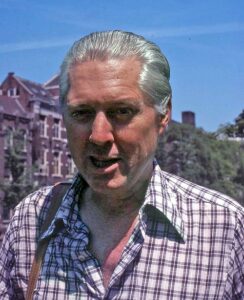
At the time when the paperback was published, in 1982, I was unfortunately not well placed to keep a check on how the sales were going, as I was behind bars at the time, serving a two-year prison sentence for “conspiracy to corrupt public morals”, a charge that arose from my work with P.I.E., the Paedophile Information Exchange, not the book. Even to this day I have no idea how many copies Alyson sold. I suspect it was quite a lot but mysteriously I never received a penny in royalties – or a dime, or a dollar.
So, no, I haven’t made a fortune. Fortunately, I am just pleased to see Paedophilia: The Radical Case in free circulation, with substantial evidence of continuing interest in it. But why does that interest continue? That is the other obvious question.
In 1980 few people other than psychiatrists had ever heard of the word “paedophilia”. If they hadn’t seen the spelling, they might have guessed it was someone who loves peas. They had heard about “child molesters” and didn’t like what they’d heard, but the subject was hardly the intense focus of public denunciation it is today. So when a radically new and positive view of paedophilia burst onto the scene in the UK through P.I.E., intelligent people would have wanted to know more.
That is what prompted Peter Owen to take an interest, and why his young editor Dan Franklin contacted me out of the blue after P.I.E. (or “pie” as we used to say it) had been the nation’s Number One news story for day after day in the summer of 1977, carried as the front-page lead in all the national papers at a time when they had huge circulations and when it was “the power of the press” that set the agenda for what everyone would be talking about.
So I didn’t need to go looking for a publisher. Dan asked me to write a book before I had even thought of doing so. Paedophilia: The Radical Case was the outcome, and a slew of other radical, or at least cautiously liberal, books on the subject came out soon after, mainly as multi-authored (safety in numbers!) academic volumes. None of these other books are much remembered today, as far as I can tell. If mine has stood the test of time somewhat more successfully, that might well be because it was more radical, more committed to its argument – although there were those on the Left at the time who felt I had been merely liberal, with an insufficiently revolutionary approach to children’s rights.
I won’t try to resolve that dispute here but there is a bigger question it would be feeble to dodge entirely. Was Paedophilia: The Radical Case actually any good? After all, beyond the MAP community it was a book that epically failed to convince the world of its case, whether that was a truly “radical” one or otherwise. No MAP needs any reminding that an utterly contrasting and hostile narrative has become increasingly dominant over the last half century, one in which sex negativity has crushingly triumphed over the positive story I attempted to tell.
The story now is all about victimhood and abuse, leaving us not just with the old wisdom that “power corrupts, and absolute power corrupts absolutely”, which is not a bad rule-of-thumb in itself, but in a virulently dogmatic new strain of pathogen transmitted through a gender revolution that was benign and welcome in its early stages (leading to greater equality and fair treatment of women), but which quickly went rogue, forgetting its early body positivity as it morphed into an obsession with danger rather than discovery and development, with misadventure rather than adventure. Intimate relationships came to be judged and policed not by whether they are in reality kind, loving and pleasurable but by whether they fit a preconceived ideal of precise equality – an ideal that is increasingly taking us towards a barking mad insistence that even adult couples need to be close equals in age to avoid the taint of being creepily paedophilia-adjacent.
Likewise, adult relationships have become bogged down in legalism. The false dogma that children cannot consent has morphed even more malignantly towards the bizarre claim that adults cannot consent either, or not without protracted prior negotiation of explicit terms and conditions, known as the process of obtaining “affirmative consent”, thereby trussing up sexuality in red tape, with all the passion-killing allure of a chastity belt. No wonder so many young adults, especially males, can no longer be bothered with dating and romance, preferring instead the simpler satisfaction to be had through readily obtainable porn – a trend now so pronounced that the political classes are beginning to fret over world-wide declining birth rates, leaving too few young people to support ever more pensioners as longevity increases.
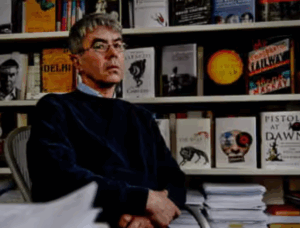
Well, even from this brief foray into asking whether my book was any good, it will be clear I am not hugely impressed by the victimhood story that has so eclipsed its message. My instinct, in light of the gender revolution’s manifestly crazy and unsustainable downside, is simply to assert that we in P.I.E. were right all along and that sooner or later our culture cannot avoid noticing that it has painted itself into a corner.
But of course that would be a grossly inadequate response, one which failed to undertake any self-critical analysis. Were there genuinely weak aspects of our case? Why did our message carry so little conviction with the world all those years ago? How might that message be reframed more productively?
Such an analysis lies far beyond the scope of this new Preface, in which my main task is to celebrate the arrival of the audio edition in the belief that the original printed one presented a case that is still largely valid and worth considering today.
It would have been prohibitively expensive to engage an actor professionally to speak the entire text, and my own voice really isn’t up to it – as you will discover if you listen to the new preface, which is the one part of the audiobook actually spoken by me. And yet a superb (new preface apart!) audio version has been achieved. How? Through the dedicated work of a volunteer taskforce recruited by team-leader Marco through Heretic TOC. Their skilful teamwork has brilliantly harnessed the wonders of AI. The result, after careful checking and painstaking tweaking, is an excellent rendering of the text in a richly sonorous delivery, with natural cadences and emphases that bring out the meaning and make for easy listening.
My heartfelt thanks go to the three-strong team, who were “Rooster”, “Undey”, and of course Marco himself (aka “FairBlueLove”). It is enormously fortunate that in the course of their labours it emerged that Rooster has a fabulous speaking voice himself and is an experienced voice actor. He graciously accepted an invitation to provide his rendering of the Foreword and Afterword from the American edition. The inclusion of these elements into the audio edition amounts to a wonderful bonus.
PILING ON THE PROPAGANDA
Did you see The Crow Girl on Channel 5 recently? I watched the first episode and a half. Even as early as that (there were six episodes) the plot seemed all too drearily predictable, as in all honesty I had expected. Pissed off, I switched off.
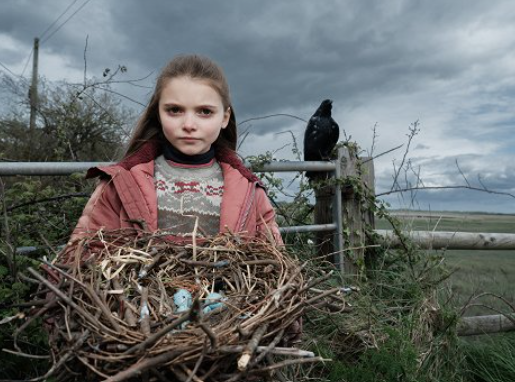
But this second, and apparently concluding, series based on an epic Nordic noir trilogy of novels has been a hit for its audience and the media, so my gut reaction might seem premature. It was right though. The story may have been brilliantly thought through, with lots of gripping twists and turns, but it still unwound with the dreary inevitability of a long cliché.
How did I know it would? Because a paedophile character, arrested over child porn and found to be sexually involved with his daughter, made an early appearance in this detective thriller, which was initially focused on a series of murders of young men, whose naked corpses were turning up very publicly and dramatically on a city’s streets.
The leading detective on the case is a woman whose own gut feeling was just like mine, odd as that may seem. Whereas her subordinate sidekick thought, reasonably enough, that the paedo was just a non-violent “kiddie fiddler”, she theorised he had some connection to the murders. Her “feminine instinct” (i.e. prejudice) turned out to be correct, as did my paedo instinct that in any drama with a MAP in it these days, the plot is bound to be twisted beyond all logic to make sure he ends up as a truly heinous villain. Not only must he be attracted to children, he also has to be malignly evil at a Hannibal Lekter level.
And, wow, what a stupendous heap of horror it turned out to be. Wisely, I feel, I chose not to waste my time on what would undoubtedly have been a riveting if also irritating watch, judging by the reviews and post-conclusion synopses. This one has everything: dozens of murders, a Jekyll and Hyde split personality motif, a terrifyingly violent industrial-scale child abuse ring led by a powerful local figure in a high-level conspiracy, and a revenge sequence to rival the spectacularly bloody come-uppances of Greek tragedy.

As such, The Crow Girl amounts to yet another grievously libellous representation of MAPs in general: collectively, we are only ever shown in one way, as the bad guys. When that happens, audiences are being fed propaganda. Rather than opening us up to fresh, thought-provoking, perspectives on reality, as the best drama does, it closes thought down and makes its appeal only to feelings. As such, it leaves no headroom for maintaining any distinction between fiction and reality. Fiction becomes reality, with grievous political and personal consequences. The Crow Girl is a particularly egregious example because it is so extreme in its cranking up of unrealistic fear and hatred, although for those of us who are anti-censorship liberals it is hard to know how to object, other than by calling it out for what it is.
HEARING FROM HANNIBAL
Speaking of Hannibal Lecter, he has just dropped me a line. Or rather the grotesque individual who may well have been his real-life inspiration has – a certain Albert Fish. Or rather his namesake, a retired solicitor who strikes me as a pleasant, sensible professional. This other Mr Fish posted a message to me through the Heretic TOC Contact button. He reflects on his experience. Although not a MAP himself, his opinions accord well with what we MAPs know about ourselves, so I am persuaded the letter is genuine. I am sure heretics here will be interested in his thoughts, and it would be great if others were to take notice, especially those in influential positions. Here, then, is the complete message:
So long ago that it seems like a past life, I was a criminal defence attorney practicing on an island off Antarctica, known as Australia.
For the record, I was born in the first half of the 1960s and there were public libraries, but no internet. That’s how I ended up with my name. No one in my family or I dare say in Sydney’s western suburbs knew anything about my namesake.
I am not a paedophile or homosexual.
I concentrated on criminal defence work and over time represented a small number of male clients charged with paedophile offences.
The first such client’s story will stay with me owing to its hilarity. He was living in a unit in a beachside suburb and struck up a relationship with a young boy who lived down the street. Things progressed from there.
This young friend grew increasingly close and used to visit him often, because he enjoyed what occurred. The problem was that this boy was a Pacific Islander who began entering puberty and his visits became more rampant as his hormones kicked in. My client admitted that he was glad he’d been caught, as the teen was growing larger and was seemingly insatiable.
As a young solicitor, what I quickly realised was that the whole legal process made the situation worse for the ‘victims’. Sometimes they’d sit with a representative from Youth and Community Services – or should that be Circuses? – whilst clutching a teddy bear, doll or whatever and being asked, ‘Did he touch you there?’ And this question was repeated until a (learnt response) nodding of their dear little head.
There is a government funded industry built around ‘the victims’, which is not to imply that there aren’t real child victims, only that the legal process makes whatever damage done indelibly deeper and more profound.
Decades ago, at a Sydney law court I spoke with a policewoman who told me that she’d been seconded to a police child sexual abuse unit. She told me her work had been hard and had affected her. She was walking to her local newsagent on Saturday morning to purchase a newspaper when she saw a man walking with a little girl, who’s hand he was holding. It was obvious that he was the girl’s father; nonetheless, this police officer confessed she had these sickening thoughts. She resigned from the child sexual assault unit the following Monday morning – just couldn’t take it anymore. Nonetheless, she admitted that the scars would be with her for the rest of her life.
The other thing I noticed was that the few paedophiles I represented were all pleasant, attentive people, aware of their surroundings and interactions with others.
A.H. Fish
Retired solicitor
At age 3 brain developed enuff to say “NO!”
Or, “YES I LIKE IT AND I’M NOT GOING TO STOP!”
Loretta Haroian describes one case in “Child Sexual Development” (2000):
The late Dr. Haroian was a Professor at the Institute for Advanced Study of Human Sexuality for many years. This monograph was prepared for student use in the mid-1980’s, and has been a part of the education of many sexologists. It is time it was made available to the general public, and the many teachers of sexuality education to our young people. The references to DSM-III are a bit outdated, but the information is still useful.
The sexual response cycle as described by William Masters, M.D. and Virginia Johnson, M.A., is present at birth, and there is evidence that the neurological maturation necessary to produce penile erections occurs in utero. The development and expression of the erotic response throughout the human lifespan is not a well studied phenomenon, and normative data have not been compiled for sexual behaviors of childhood and adolescence. As we know it, the erotic response consists of a complex interplay of physiological and psychological factors that are highly susceptible to familial, religious and cultural folkways, mores and attitudes.
The styles of acceptable sexual attitude and expression fluctuate historically and culturally between generally positive and generally negative polarities. At this time, our own restrictive culture time is still preoccupied with imposing sexual constraints rather than promoting sexual competencies as a basic value system. We are certainly less zealous in this pursuit than the repressive Victorians, but fears of sexual excess and pleasure leading to a fall from grace are deeply imbedded in the Judeo-Christian ethic. The impacts of this often unconscious attitude on child rearing are the overt and/or covert discouragement of sexual interest, curiosity, expression and sexual behavior of children in the presence of adults and the continual obfuscation of the scientific answer to the question “What is normal?”
Sexually permissive cultures not only allow a less fettered expression of adult sexuality, but may give little attention to the sexual behaviors of children as long as they are not blatantly displayed. Sexually supportive cultures, believing that sex is indispensable to human happiness, encourage early sexual expression as a means of developing adult sexual competency and positive sexual attitudes. The children in sexually permissive and sexually supportive societies display a similar developmental pattern that is not apparent in sexually restrictive and sexually repressive societies.
In infancy, there is usually manual and oral genital stimulation of children of both sexes by parents as a means of comforting and pacifying them (most frequently between mothers and sons).
https://go.gale.com/ps/anonymous?/id=GALE%7CA154817864&sid=googleScholar&v=2.1&it=r&linkaccess=abs&issn=15455556&p=AONE&sw=w
Pup’s reference is to Child Sexual Development, by Loretta Haroian, who was with The Institute for Advanced Study of Human Sexuality (IASHS) in San Francisco:
https://en.wikipedia.org/wiki/Institute_for_Advanced_Study_of_Human_Sexuality
Dr Haroian took a positive view of child sexuality but was far less liberal as regards child-adult sexual contacts.
The whole of her 24,000-word text can be read here:
https://www.dropbox.com/scl/fi/nips6hj2ckuvoe2b2u3n1/Haroian-Loretta-Child-Sexual-Development.doc?rlkey=mafnd4ut7t5vzkg9acmhvno57&dl=0
Humans has the inherent ability to distinguish between pleasant and painful stimuli from an early age. Sometimes a person needs to try to figure out if something is pleasant or painful. Some things may be painful, but are consciously accepted by a person if it brings benefits and satisfies some needs. For example, sports can be extremely traumatic, but parents still send their children to sports from an early age. By the second year of life, children should be able to walk, otherwise it is considered a developmental delay. Although, having learned to walk, a child can run away and get hit by a car and to prevent this, they should be taught the rules of the traffic light, rather than told that their psyche and frontal lobes are not sufficiently developed.
From birth, adults have to “corrupt and abuse” children with new knowledge. They buy them bicycles or skateboard and evel Tony Hawk might come to stand on the very high ramp as a sign of support before the dangerous descent; adults can take children on a plane to jump with a parachute; even a stranger can touch a boy’s penis and cut off a piece of it, and all of this will not be considered abuse and there is no mental trauma. Marvelous.
Unfortunately, humans also has inherent to assign negativity and taboo natural things like “Sex”. And censuring information about sex isn’t considered intentional developmental delay. On the contrary, it’s a blatant excuse for anti to claim children are incapable of giving informed consent. And of course, their frontal lobes aren’t ready for that either. Pure hypocrisy.
> Did you see The Crow Girl on Channel 5 recently? I watched the first episode and a half. Even as early as that (there were six episodes) the plot seemed all too drearily predictable, as in all honesty I had expected. Pissed off, I switched off.
Meanwhile the (rare) rational World awaits a realistic, “Canary Girls” Loudly singing the praises of positive early and pre-legal sex, with promo, “Love Knows No Law”.
Even Ivy League Universities Slut Shame (Richard Hanania, October 1st, 2026).
Troll me about “Jane Doe,” please — not others (Michael Tracey).
These are posts about the “Cornell 7,” the next big gender/sex wars case to come after Lindsay Clancy.
As far as I’m aware, the Cornell case is about a young woman who had group sex with many young men at the same time, whilst intoxicated, at a Cornell university frat house in the United States. It has emerged that some of the men talked about her in controversial and arguably dehumanizing ways – “Is the shop still open?,” “Yea,” and “free pussy upstairs.”
The debate hinges on whether the woman consented to said sexual activity or not, and is complicated by claims that she felt positively about the experience at the time, but months later came to see it negatively and has now filed rape and sexual assault charges…
Over in the Twittersphere, big names like Shoeonhead have come out hot, arguing that after the gangbanged woman felt her reputation was ruined, she then switched to calling her experience “rape.” The argument is along the lines that real life isn’t like porn, and rather than feeling empowered, happy, or getting paid for sex like Bonnie Blue would, she instead felt ashamed and embarrassed, and couldn’t handle the social and reputational cost. Hence, Hanania uses the phrase “slut shaming”….
I’m not sure, myself, haven’t read into it much and don’t plan to. But what I can say is that Michael Tracey has been blowing up on social media over this case, after he announced his intention to find the real name of the “Jane Doe” in question, because he believes that alleged “victims” should not be able to hide behind anonymity when their accusations are ruining other people’s lives before any trial has even began… He claims that people online have been contacting his parents, trying to find out where he lives, such is their rage at his attempt to “doxx” the alleged victim…
Another day, another dollar. But you may all find it interesting, and note if nothing else, that people like Hanania and Tracey are making a difference, are having a cultural impact. Change is possible, but unpleasant in the moment…
>people like Hanania and Tracey are making a difference
It’s great to see they are getting traction. They are doing superb work, very courageously.
Bonnie Blue must understand how we suffer. she gets called the P and N word too.
A Guide to Pedophile Accelerationism – MU MAP Forum.
This post made me LOL :p
This is an absolutely brilliant essay, not just amusing and perceptive but also remarkably circumspect and wise. Well done, whomsoever!
This strategy to encourage extremism with the hope that it will produce a radical backlash does not work. In 1932 in Germany, the Communist Party in the grip of Stalin proclaimed that its main enemy was the reformist Social Democracy, and that if Nazis came to power, it would lead to a mass revolutionary rebellion. Quite the contrary, when Hitler became Chancellor in 1933, the whole labour movement was soon crushed: trade unions and both Communist and Social Democratic Parties.
The other scenario mentioned in the article, “a Third World War breaking out, society collapsing entirely, and new societies emerging with a completely different mindset” is much more probable.
Otherwise, as the present ideology comes mainly from the USA and spreads throughout the world due to US supremacy, the current decline of this supremacy, accelerated by Trump’s obscurantist and ignorant policies, will lead to the emergence of influences from other regions of the world, notably Asia, where American puritanism has not yet taken deep roots, and the dogma of insuperable power imbalance due to age difference does not prevail.
Odd, or not or wot?
Ever accelerating academic walls of words on MAPs. Yet not one word on obvious Worldwide counterpart millions of AAMs-ADULTOPHILES in plain sight.
Never a child born that wasn’t HOT for an ADULT, aunt/uncle/neighbor/teacher/celebrity.
Check current F.B. Nanci Hildebrand: “I wasn’t quite 10 yet, but was in love with Elvis.”
And, Award winning poet Delphine Lecompte (2021).On May 6th, 2021, the Dutch Newspaper “Propria Cures,” latin for “Mind Your Own Business,” published an issue in their newspaper on free speech, specifically in relation to pedophilia.[2] Lecompte’s contribution was number 8, titled “The gardener and the five-year-old child,” which appears to be an account of Lecompte’s own positively experienced sexual feelings and age-gap sex in childhood. Among other things, she wrote (retaining her original formatting):
https://wiki.yesmap.net/wiki/Testimony:_Adult_Male_with_Minor_Female#cite_note-3
Just to be relevant to the blog: RIP Hubert Kennedy. He was a fantastic researcher and source for a ‘gay’ history that didn’t exclude the pederasts! He wrote about Peter Schult and Mario Mieli, and bigger names like John Henry Mackay (Sagitta), and Karl Heinrich Ulrichs, all of whom were relevant to the sexual freedom movement in their own ways…
Hubert wrote about the German youth movement and its homosexual tendencies prior to the rise of the Nazis. He published original transcripts from “Der Eigene“, the first gay journal in the world, and published on “Der Kreis” , an early Swiss gay journal which, like Der Eigene, had what we’d now call “BL” themes…
With such command of multiple languages and such devotion to research and writing – in a time where academia was a much more secure career and you were less likely to be ‘cancelled’ full-stop – Hubert knew, probably better than most people on earth, just how normal and commonplace age-gap relationships had been throughout history. How what we now think of as ‘gay’ – same-aged adult-adult men and women – was a historical aberration rather than a norm.
The fact he was open-minded and evidence-based when it came to “pedophilia” as well, is only further testament to is greatness as a researcher and as a person. If Hubert did have any hatred in his heart, it was for homophobia and sexual stigma. He wasn’t willing to lie, to deny the evidence of his eyes and ears, all he had read and learnt across a lifetime. He was a quiet, fabulous historian who brought so much to the English-speaking world.
I hope that I can find a better image of him to put on Newgon sometime; one of the most basic rules is to make your allies look good and enemies look bad… I also hope I can check out his autobiography From My Life (2009), and see if he talks about age and sex in his own life, possibly positive homosexual experiences in his youth.
RIP Hubert Kennedy…
>I hope that I can find a better image of him to put on Newgon sometime; one of the most basic rules is to make your allies look good and enemies look bad…
Bearing that in mind, could you find a photo of him when he was about 8 or 9 years old? 🙂
Actually, I think he looks a perfectly presentable young man of 52 or so in the Newgon photo, but that is from an octogenarian perspective!
All age HOT Lolis KNOW what they want KISSES!
https://www.facebook.com/reel/27957004990647776
She’s told she can’t have a boyfriend until she’s THIRTY! Fortunately, she has other ideas!
why does america jail teens for sexting? this is worse than 9/11. thousands of teens prosecuted ! lives ruined forever. why do no celebrities speak out about this abomination??
While the book had some funny moments, it offers up arguments of the type: No sane man would disagree with P, where any man of logical inclination can see counter-examples abound, or assertions Q seems correct, absent any scientific pretense! Thus, the illusory sense of kinship (upon 1st reading, AFK groups were unknown to this reader) is quickly replaced by alienation, aided by fondness for revisionist history. Having aged, my inclination is now to dispose of any work so irredeemable.
As GLs cannot be presumed, in general, to be idiots and degenerates, where is the strategic case for the feminist/homosexual agenda? A reader can recall not only the attacks on marriage, but eugenics even targeting children (almost certainly of the working class, unworthy of life), which feminism did far more than flirt with (this great love continues) in material reality!
By contrast, the revolutionary Left, partially stood up to said agenda in the 30s by implementing a pro-child, pro-marriage, pro-family strategy as part of a functioning society, also delivered an AoC of puberty (perhaps not even strictly adhered to for girls). Such “social conservatism” is far too radical for the author, bemoaning opposition to Hirschfeld (the relevant – and omitted by the author – goal of his reform included increasing the age of consent and sterilizing pedophiles, to prevent offspring).
As I have said many times, Lex, I am no fan of the more narrowly self-interested and intolerant versions either of feminism or the gay movement.
The case advanced in Paedophilia: The Radical Case was for the acceptance of consensual child-adult sexual intimacy in any gender combination, with no prejudice against man-girl love. That was arguably the book’s unique contribution back in 1980 at a time when some radicals in the gay movement were making the case for man-boy love while tribally denouncing GLs as the bad guys.
As for “bemoaning opposition to Hirschfeld”, the regret I expressed in the book was more over Hitler’s suppression of sexual radicalism than in favour of Hirschfeld. I suppose fans of Hitler (not you, I hope) might reasonably feel I got this wrong!
You are entirely right, however, when you point out that Hirschfeld advocated an age of consent (he favoured 16), unlike some other German reformist radicals of his own day, notably Adolf Brand and the group surrounding the journal Der Eigene.
This may be a bit off-topic for the blog, but in addition to what has already been mentioned, I am inclined to believe that Hitler’s attacks on homosexuals and the Hirschfeld’s archive are (perhaps) linked to Hitler’s own secret homosexuality and to Hirschfeld’s accounts of individuals reporting homosexual encounters with Hitler prior to his rise to power. Many details of this maniac’s biography convince me of his homosexuality. However, a serious, in-depth study of this aspect is uncomfortable and painful for the modern LGBT movement, which is IMO why academic circles are avoiding to explore the issue.
You may be right. I wouldn’t rule it out.
For Matt and other MAPs. Online persecuted by the Anglo modern/mediEVIL ‘pitchfork’ lowbrow mob, fake media groomed to worship the AGFG – Age Gap False God.
Pitch them the millions of anti-Age Gap positive seXamples of AAMs MOCKING fake sex laws since year dot.
From the adolescent AAM Holy Mary wed to beardy MAP Holy Joe, or 6 y.o. AAM Aisha betrothed to Holy MAP Muhammad. To Anglo King James 1 authorizing the new English Bible while attended by courtiers all young boys with slim legs and pert butts. Or Rock God Elvis with Priscilla, 13, among millions more underage pro-active HOT Lolis including unrepentant Baby Groupies at the court of King Rock n Roll.
How many millions more unstoppable AAMs do the fake media groomed lowbrow pitchfork mob need RAMMED up their lowdown assholes?
https://www.google.com/search?client=firefox-b-e&q=muhammad+and+aisha
>How many millions more unstoppable AAMs do the fake media groomed lowbrow pitchfork mob need RAMMED up their lowdown assholes?
Recalls a YT comment by a pitchfork punk on an anti Gary Glitter vid. “Let me share a cell with that ‘Dirty Glit’ there won’t be much left of him by morning.”
Responded to by a street-smart tough tart ‘Tina’ getting BIG thumbs UPs, “If you were banged up with Boy Lover Ronnie Kray, he’d rip yer head off and shit down yer neck for breakfast!”
Now THAT’s a-tellin ’em Tina.
Anglo MAP female PE teacher convicted for sex with two schoolgirls and one male pupil.
https://uk.yahoo.com/news/female-teacher-had-sex-two-133200127.html
Rightly rephrased: “Anglo HORNY teens/AAMs consensually shagged HOT femme bi-MAP teacher, then Anglo persecuted for mutually pleasing HOT teens/AAMs.
Never in non-Anglo sex-bon belle Francaise. Where AAM Emanuel,15, made the top job after being serially aMused by benign MAP Brigitte, 39.
Horny Tweens-Teens/AAMs shag MAP Teachers now almost daily. Yet still unseen in plain sight? Millions of Adult Attracted Minors/AAMS long before, and much since celeb MAPs Sinatra, Presley, Beatles et al. Make the case for Pup’s companion for Tom – ‘Adultophilia The Rational Case’.
Historic photos of Frank Sinatra with young fans—famously known as the “bobby soxers”—capture the birth of modern pop hysteria in the early 1940s.
No surprise that by the late ’50s MAP Frankie (with a HOT Loli daughter Nancy and HOT Loli school pals) was HOT dating 13 y.o.Tuesday Weld in Hollywood asked by her Mom to test for Kubrick’s planned ‘Lolita’ movie, she quipped, “No thanks, and I don’t need to test, I AM LOLITA!”
https://www.facebook.com/groups/1197148210866148/posts/1558717748042524/
https://www.instagram.com/p/Dba_MI6xPP1/
Adultophilia The Rational Case
I like the title. Has a bit of a ring to it. Can’t think why. 🙂
>I like the title. Has a bit of a ring to it. Can’t think why.
So, start the ‘Rational’ Print-Audio-Visual book Tom, with millions of AAM POSITIVE cases unseen in plain sight. Which no dim Anglo negative antis can trash – before or after dark?
In a way, I can certainly understand her…
[Right click on “Comment image” to open new tab and see the photo of young the adolescent Emmanuel Macron]
Hell, yes! I had no idea the young Macron was so dishy!
meanwhile in loony bin usa a pedo was exposed on discord. crime? 19 year old talking to 17 year old. 180000 likes. shoot me now !
A Tweet by the New York Post about ‘Wheel of Fortune’ announcer Jim Thornton, got over 20 million views. And that’s just one news organization. He is going to be having a VERY hard time right now, having to explain himself to his wife and son, not to mention the many friends and colleagues he’ll have made over the years.
Poor bastard, he looks so lovely and smiley. I think the best strategy is to keep doing what I gather he’s doing: lay low and focus on your personal life and immediate affairs. Let the media move on and if asked, just repeat via a lawyer “misunderstanding” + “no crime done.” Good for him that he’s likely already rich by most people’s standards, can probably now choose to retire or take a break, and just spend the next few years consolidating relationships.
In a few years from now, if he wants to, a pushy agent can probably get him a role on a radio station or TV programme – announce it as a “grand comeback.” Either that, or he could start a podcast if he gets bored? No real guarantee or upfront money in that usually, but if he loves to talk for a living it’d be an option.
Michael Tracey, Gloria Steinem: leader of the “Women’s Movement,” peddler of “Satanic ritual sex abuse” garbage – turns out, she was a dogmatic “true believer.” “Believe the children,” evidence be damned! Of course, that “belief” only goes one way. If they say they’re ‘abused’ it must be true; if they say they weren’t, then they’re lying, being manipulated, forced to say that or ‘groomed’. I’d just prefer, like Tracey, that we look at things rationally, and certainly want high standards of evidence if we’re talking about criminal cases and legal trials…
A very unique piece by Tracey here.
He was suspended from his job, and fired two days later.
Assuming they’re real, photos show the presenter reading Lifeline, a suicide-prevention chatroom commonly advertized on Boychat. By context, he’s the poster “NicholasB77,” and mentions another site called “Boymoment.”
It’s possible it’s a huge misunderstanding / wild coincidence, but if you’re keeping score of famous and influential MAPs, you can likely add Jim Thornton. His credits include “The Price Is Right,” “Jeopardy!” and “Celebrity Wheel of Fortune.”
Paul Walker of fast and furious fame too. he is dead though. Was never a fan but i am now as he was seeing a 16 year old in his 30s. Not sure how he got away with that as 18 is AOC in that dreadful state of california.
It sounds to me that those actions are impulsive and desperate.
Wow! I am staggered by how casual Thornton was, allowing his “suicide-prevention” work to be seen so easily by fellow passengers. As a (now suspended) TV presenter, one might have expected him to be smarter, and more cautious.
By an interesting coincidence, a very similar incident was featured last night on a new Channel 4 series called “999: What happened next?”
Did anyone here see it? This was a train passenger in the UK who spotted what he considered to be child porn on another traveller’s phone. He phoned 999 and a whole army of police were mustered to arrest the suspect when the train pulled into London’s Euston Station.
This poor guy was definitely not the cautious type. Even the lock-screen photo on his phone was said to be a child-porn image!
Not that it could possibly have been “explicit”. That seems obvious because when the police inspected the phone they didn’t have enough evidence to bring a case against him. But further investigation showed he had tried to buy a contact with a child online with explicit sexual intent.
His luck was out, though: it turned out to be a Nigerian scam. When he arrived at the address where the girl was supposed to be, he was told she’d had an accident and was in hospital. But that didn’t stop him being jailed for over two years for his attempted offence, plus porn that was also eventually found in his possession.
“Wow! I am staggered by how casual Thornton was […] one might have expected him to be smarter, and more cautious.”
> He’s an older dude, with no criminal history and a work life many would dream of. Easy to let your guard down with what you see as a low-risk activity.
And no, I don’t tend to watch “true crime” type things: I just see them as records of people’s lives being ruined, which disgusts me. I generally despise those kinds of programmes. All the bullshit framing, the spooky / dramatic music, the fact they often show the suspect / convict’s face and personal details, thus ruining their life further than just the criminal charge itself. It’s horrible and I usually just feel sorry for the people involved. Usually, they’re poor, lonely and alienated from society, and then of course the law comes in and worsens the problem. Would be different if it were a programme about rich people’s financial crime – dramatize that for a change and take it seriously – but no, it’s only sex people care about…
As for the Channel 4 guy himself, it sounds like a crazy story, and he’s an idiot for attempting to meet a minor from an online convo in the first place. Was he neurodivergent, perhaps? Because I feel most people, at this point, if they’re over the age of 21 and plugged in to social media, would have an awareness of how dangerous and controversial that would be. It sounds like the passenger who reported him was being OTT, if even the police didn’t find material on his phone to be ‘severe’ enough to warrant a case. That said, it hints at the heightened, arguably ‘extreme’ sensitivity the West now has when it comes to age and sex.
Relentlessly, we are bombarded with stories of ‘Jeffrey Epstein,’ Prince Andrew, Trump and everyone else being a “pedo.” People are obsessed. It’s on everyone’s minds, all of the time. I swear I’ve seen it, people ‘joking’ about how their friend’s a “pedo” because they’re dating someone younger, or work with children and don’t hate it, etc. Even not so long ago, the world seemed to be so much more innocent…
Recently, rapper Drake got with a famous ‘Goth’ influencer with fat tits called Pinkchyu, and people were accusing her of getting with a “pedo” in her comments. Obviously, that’s nonsense, and she doesn’t care because she’s rich and finally ‘made it’. But god it’s so sad and ridiculous, how “pedo brained” people are (without ever *actually* researching the topic! Lazy fuckers!!)
>Was he neurodivergent, perhaps?
He was said to have “learning difficulties”, so you’re on the right track.
He was easy prey for all manner of predators, including:
1. Scammers, such as the Nigerian ones.
2. The police: why chase hard-to-convict big-time financial wide boys when you can wreck someone’s life based on a single phone call (999) with very little effort?
3. The media. Channel 4 were gifted a highly photogenic story (dramatic arrest at Euston), without having to do tedious, costly, investigative stakeouts and such like. Shame the photogenic aspect didn’t extend to showing us even a single one of the allegedly sexy photos, not even the mild lock-screen photo!
And, yes, of course I also despise the lazy TV docs that do this stuff, allowing themselves to be used essentially as the police’s key PR tool. We all know the police are crap at dealing with real crime. Without the constant supportive propaganda they get from these TV shows, everyone would be demanding they are defunded and disbanded.
It is useful to tune in occasionally, though, to keep aware of changing police priorities and what they are up to. 24 Hours in Police Custody is often interesting on procedural details and evidential requirements.
I wouldn’t personally advocate defunding, BTW. Just re-prioritising.
“He was said to have “learning difficulties”, so you’re on the right track.”
>Knew it!!
I mean this in the nicest way possible, but Jim Thornton is so fucked…
The screenshots are so bad. What he said so overt and open. He’s actually really reasonable, and pleasant to everyone else. But god the baying masses will be horrified to read what he wrote…
>The screenshots are so bad. What he said so overt and open.
Really? OMG!
LifeLine’s public statement:
https://lifeline.chat/media-response.html
Read it a while ago! (And even saw that TMZ has written a piece about it).
Brilliant statement overall. And, I’ll moderate my earlier “he’s fucked” statement: his career on Wheel of Fortune is fucked. That doesn’t mean he can’t have a career in future.
How he wants to go forward in regards to his public image – deny he’s a BL, run with the fact he’s a BL (who’s done nothing wrong), or retire – is up to him. At present, I suggest sleep, and sticking with supportive friends and family.
People’s thoughts on the Lindsay Clancy trial?
If you’ve not heard about it, look it up. It’s exploded on social media, dividing men and women, partners and friends, and finally making it to mainstream media reporting.
It’s so divisive, that not only do we have people claiming to have broken up with their boyfriends and girlfriends over it, but the jury can’t reach a verdict either! Over 80 witnesses, 300 pieces of evidence, but the 9 women and 3 men cannot agree!
To what extant can mental illness absolve a person of criminal liability? How in-control of our actions are we really? And then there’s gender bias: would we see different responses if Lindsay Clancy were a man? Would that be justified and reasonable?
If Tom O’Carroll had been a woman, would the press have branded him a “bodacious babe who wants to fulfill every schoolboy’s dreams?,” rather than a threat and menace to society?
>…would the press have branded him a “bodacious babe who wants to fulfill every schoolboy’s dreams?,”
I doubt it, if only because I’m pretty sure I have never seen the word bodacious in the UK press before, although I gather it was popularised via the film Bill and Ted’s Excellent Adventure some decades ago.
It’s a nice thought, though. I think I could stand being called bodacious but I’m not sure about ““bodacious babe”. Guess I’m not trans enough to run with that! 🙂
It’s been very divisive. I’m pretty sure that if there was sex involved and the guy was a man, the judgment would have been sooooooooo different
Anglo fake media groomed mugs don’t know that France legalized Gaysex in 1791, and since 2017 have a MAP 1st Lady.
1791 France became the first Western country to fully decriminalize consensual same-sex relations between adults.
1982 Equalization: Under the presidency of François Mitterrand, the French National Assembly officially repealed the discriminatory penal code provision, this equalized the age of consent for all sexual acts at 15 years old.
1993 Emmanuel Macron, 15, began an affair with Brigitte Trogneux, 39, French 1st Lady since 2017.
http://www.independent.co.uk/news/world/europe/…l-play-a7710561.html
In 1832, the first specific age of consent was introduced in France, at 11 years. After 30 years, in 1863, it was raised to 13. Another 80 years later, in 1945, it was raised to 15 years. In 1977, there was an attempt to abolish the age of consent.
Physiology did not degrade; on the contrary, puberty accelerated. But instead of accepting youth sexuality, politicians are simply brushing it aside, earning political points, pushing the border further away and increasing moral panic (in collaboration with media)
>Physiology did not degrade; on the contrary, puberty accelerated. But instead of accepting youth sexuality, politicians are simply brushing it aside, earning political points, pushing the border further away and increasing moral panic (in collaboration with media)
The backward Biblical legacy of Anglo fake Puritanism falsely ties sexual purity to morality. While the hypocritical commercial and adversarial nature of lowbrow Anglo main media relies heavily on sensationalism and false division to generate clicks and ratings from lowbrow morons. Creating Anglo moronic fake outrage over most issues; not just sex.
Well good on france, although them making it illegal to pay for sex loses them many points. Freedom hating americans be foaming about that relationship. Sadly its getting worse, apparently alaska and Oklahoma have raised the aoc to 18…
Thanks for making this available. I’d love to have a physical copy, but the only thing I can find is someone trying to sell an original hardcover online for $400.
>someone trying to sell an original hardcover online for $400.
Yes, I’ve seen that sort of price tag before. I doubt anyone ever pays that sort of money, but you never know.
I’m glad to hear “Radical Case” has been, and continues to be, well read. AI is making our DIY productivity increasingly easy to achieve. I know how expensive it is to get a professional to read an entire book but thankfully that will soon be a thing of the past. RC is a great book and here’s to AI gaining a new audience for it.
Cheers, JM, good to hear from you.
Thanks Tom. I always check in for the updates 🙂
Where can I find your book or download it for free ?
Scroll down the alphabetically listed Hotspots in the right-hand column of the homepage until you see this:
“Paedophilia: The Radical Case Free download of 1980 book by Tom O’Carroll”
Just click on it.
That gets you to the book’s ResearchGate page. Scroll down until you see the text.
Yeah I’ve seen it thanks you
A simple google search will likely find you a free PDF of Tom’s book. For years, the book has been available via a website called IPCE, which is linked on this page.
Tom has added that PDF to his personal Researchgate page.
In my own small effort to make sure Tom’s text is preserved online for free, I uploaded the PDF to Library Genesis (Libgen) – the world’s largest shadow library containing millions of books all for free – with my own description. Since publisher’s don’t like Libgen making all their books available for free, the site is unreliable and changes address a lot.
The best back up of Libgen is Annas Archive, where you’ll find Tom’s book: https://annas-archive.gd/md5/a3ae585c3f0c54c3eab7cdc09ea8c90f
To read further about the book, with rare images of the first edition and its back cover (with enthusiastic quotes from some big names!), see: https://wiki.yesmap.net/wiki/Paedophilia:_The_Radical_Case
Thanks
>To read further about the book, with rare images of the first edition and its back cover (with enthusiastic quotes from some big names!)
It’s great to see some enthusiasm about those enthusiastic quotes! Thanks, Prue!
Remember Carleton Gajdusek, the deceased Nobel Prize winning scientist who was open about his paedophilia? Well, the Youtuber Rebecca Watson, founder of the “Skepchick network” who I’ve lampooned for having no skepticism or critical thinking where questions of age, sex, or “pedophilia” are concerned, has made a nasty video on Carleton…
While it’s acknowledged that Carleton adopted kids and taught them to read, cared for them and had many positive influences on their lives, his sexual activity with these children is rendered as “rape,” rather than “sex,” “oral sex,” “jerked off,” or any meaningfully neutral or clear descriptor. For a start, “rape” implies penetration, which I have seen no evidence of in any writings or documentaries about Gajdusek. For Watson, the fact that Carleton’s colleagues at the National Institute of Health (NIH) sponsored and acted as witnesses to his adoption of foreign poor kids to America, with some even helping to take the kids shopping for him, renders the whole thing a massive “sex trafficking operation.” Gajdusek wasn’t “adopting” these youngsters, he was “abducting” them, so says Rebecca…
She’s inspired by a recent article in the New Yorker – The Children a Scientist Took Home, by Rachel Aviv. It’s long and fairly reasonable and humanizing; after all, Gajdusek was a well-liked, confident and intelligent man. Many of the children he raised and his colleagues, spoke positively of him even after the FBI initiated legal proceedings against him…
If you don’t know it, it’s a fascinating story of a very rare figure from a time not so distant from our own, where again the light of reason and decency shines through: his colleagues acted how I’m sure most people would act if they didn’t believe or see any evidence of harm going on. These people were all highly educated, knowing enough to see well outside the strictures of their own culture.
I’ll update the Newgon page w/ some nice new quotes from scientists about how he was a hero, etc.
[Documentary on Carleton: https://www.youtube.com/watch?v=4OxppDxzSww ].
>For a start, “rape” implies penetration, which I have seen no evidence of in any writings or documentaries about Gajdusek.he 24
No doubt ‘MASS MIND RAPE’ is what lowbrow main media has committed, before and much since victim genius gay Oscar Wilde rightly noted in 1891, “The 4th Estate is now the only estate, it has eaten up the other three. We are DOMINATED by journalism.” And, more recently, truth-teller victim Julian Assange falsely jailed and accused of not being a real (state puppet) journalist, “In 2006 I launched Wikileaks because mainstream ‘selective’ mass media are not real journalists.”
Thought id post something a bit more light hearted. Replied to this killa klown idiot on facebook that my wife was 16 and whats he going to do about it. he said i was sick and twisted lol. he even used the P word. the intellect is off the scale!
Off the scale!!!
Long running Harry ‘hysteria’ in predatory lowbrow media for decades ongoing in deep denial. That Harry (and lesser so older bro William) is a life scarred ‘victim survivor’ of mental/emotional SERIOUS CHILD ABUSE. Caused by predatory lowbrow media for years hounding their much loved mother to death, and then compounding their crime by mercilessly encouraging the young boys’ ritual walk behind her coffin, and further picking on the growing boys at any opportunity. While cringing cowardly lovers Charles and Camilla had both cheated on Di.
Quote cringing coward Charles, “Whatever love is?”
Quote late great Di, “There are three people in this marriage.” And, “It’s getting abusive and it’s getting dangerous.” Often driving alone while mercilessly chased around London streets on speeding motor-bikes by foul mouthed ‘Fee Speech’ lowbrow parasite papperazis yelling, “Whore! Slag! Bitch! Cow! Tart!”
Quote Di’s BIG Bro Charles Spencer, “The media has BLOOD on it’s hands!”
Re-quote lowbrow media monsta predatory psychopath Murdark, “My only regret is that I paid too much for some photos!”
Re-quote, late great MAP DeeJay John Peel, 7th Anniv of Di’s death by tabloid – Indie on Sunday 29 Aug 2004, “Rupert Murdoch has destroyed most of what was good about this country.”
im losing the will to live ! its bad enough dealing with antis but when they say something offensive and i try to challenge them my comment disappears! (youtube, facebook) so they think theyve won the argument. twitter is pointless. dailymail censoring me too. but im not censored here so thank you so much. ughhh
I would just not bother with the Antis, Matt. At least not to the point where it’s taking up lots of your time or negatively affecting your mental state.
Brian Ribbon has called them “algae,” or pond scum. I would say that they’re beneath talking to, barely worthy of the moral consideration that one should give human life. Like all bigots of the past – racists, homophobes, etc. – they’re just uncritically reflecting what’s popular, and won’t stop or see reason until they are made to feel ashamed, to feel consequences, for expressing their hatred. They dehumanize others and lack empathy, they revel in the suffering of others. They’re not good people, and despite their grandstanding, they often fold under the slightest pressure.
You can’t convince everyone, and you don’t need to. Some people will take their racism to their graves. Likewise with anti-MAP hatred. It’s much better to focus on building up your own life, and if you then want to act to influence mass culture, you’ll be much better positioned to do so…
I’ve made tons of Newgon pages over the years, full to the brim with useful information, quotes and links that anyone can view for free. Any one of those pages could light the spark for a reader, be the chink in their armor that gets their critical thinking skills going. If I’d been arguing with Antis all that time, not only would I be bitter, emotionally fried and despondent, but I’d have ultimately achieved very little…
Focus on yourself, Matt. Save your time and mental state. If you want to combat the Antis, just report them for hate speech, instead of making yourself vulnerable by debating them in comments sections. Brian Ribbon is gathering evidence of violent threats, the names and locations of these hate preachers, and anonymously reporting them to the FBI. You can do something similar; even just reporting the account to the platform host itself (e.g. YouTube, Facebook, Instagram, etc.) is better than nothing.
Otherwise, ignore the Antis and build up your own life…
All the best to you,
Prue –
thank you v much for the reply , Prue. obviously i agree with you. I just think ive got good ammo for them but whats the point if it disappears… yes i want to make a life for myself but i want a partner and i dont like people my own age… yes, even dating a 19 year old will cause me misery. i need to get out into the mountains like tom….
https://flashbak.com/the-rolling-stones-were-proud-to-withstand-under-age-sex-the-1994-poster-and-t-shirt-9356/
In plain-sight, now unseen? Worldwide (not just L.A.) millions of underage fans positive testimonies long overdue in the MAP-AAM revised lexicon, ‘Adultophilia, the Rational Case’. For some reason not yet available anywhere.
Former 1970s “Baby Groupies” like Lori Mattix (Lori Lightning) and Sable Starr have frequently stated they have no regrets about…hanging out and being intimate with rock stars like David Bowie and Jimmy Page, despite modern ‘Stalinist’ re-evaluations regarding the ethics of those relationships.
Obvious History: Rock’n’roll’s baby groupies Lori Lightning …
Interview Magazine https://www.interviewmagazine.com › culture › obvious-…
Lori Mattix: The ‘baby groupie’ who dated David Bowie and …
Reddit · r/WhyWereWeOkWithThis 280+ comments · 3 months ago
Nixe_Nox. •. 2mo ago … As op said, she says she loved being a “baby groupie” and having …
Obvious History: Rock’n’roll’s baby groupies Lori Lightning and Sable StarrBy Trey Taylor April 20, 2018
https://www.interviewmagazine.com/culture/obvious-history-rocknrolls-baby-groupies-lori-lightning-sable-starr
Glad the audiobook is released and am very happy to have helped out!
Also, it’s very unfortunate to hear about The Crow Girl. Not only has the propaganda gotten more extreme, I feel like it’s also gotten more plentiful lately. A natural course of the hysteria becoming more popular I suppose.
For those who follow academia news, yesterday it became clear that Jason Arday, Professor of the Sociology of Education and the youngest black person to reach the rank of Professor at Cambridge University, has killed himself…
Another victim of cancel culture, Jason was a man, a father of two, and had has his academic work and life history rigorously scrutanized by the online world, dogged as he was with accusations of plagiarism and telling fanciful lies about his personal life.
His case is therefore very different to those of Allyn Walker, Jacob Breslow, Stephen Kershnar and the like. He most closely resembles Kershnar in identity and academic rank, but then Kershnar has shown resilience throughout his career of always writing on “controversial” issues, having taken legal action against his university long ago and training as an Attorney as well. Kershnar was never accused of plagiarism, and the controversy around him was arguably less intense and sustained, even if he still effectively lost his job over it…
Jason Arday appears to have been unaccustomed to serious pushback, and much more sensitive and afraid of criticism. He exists in a different culture to Kershnar, where it is not as normal in the UK to initiate criminal / legal threats against one’s critics. Jason heavily biased people against him when it became known that he’d reported two people investigating his work to the police – one a retired academic, and one being Times Higher Ed reporter Jack Grove.
Much of the criticism against Jason Arday came from people who saw him as an unjust “DEI hire” – that is, he was hired for his race, not for his academic excellence. This spat of controversy sprang from a Substack article by one Nathan Cofnas, a self described “race realist” who lost his position at Cambridge after making incendiary public statements about race and IQ. Now, while Cofnas builds a side career in “alt academia,” writing on Substack, speaking on podcasts and at events, his piece unfortunately initiated a wave of condemnation and media scrutiny of Arday that has lead to his death.
What a sad state of affairs…
Prue rightly points out that the tragic death of Jason Arday, apparently through taking his own life, appears to reflect his personal sensitivity. I imagine Allyn Walker, Jacob Breslow, and Stephen Kershnar, other figures who have been, as Prue reminds us, impacted by cancel culture — in their cases in connection with taking controversial positions on MAP issues — also felt mightily stung by the highly personal attacks to which they were subjected, but they all appeared to understand that criticism goes with the territory when you have ideas others may not like, and were more robust in the face of it.
Arday, by contrast, has widely been described as a “vulnerable” individual, which I feel should have made it obvious that he was no more suited to the rigours of an academic job than an aquaphobic non-swimmer would be to employment as a beach lifeguard. That alone gives reason enough to leave those who encouraged and supported his appointment as a professor, and any earlier academic positions, with very awkward questions to answer.
Anyone with an ounce of common sense should have seen this accident waiting to happen from a mile off — unlike, for instance the much less obvious vulnerability of the head teacher whose suicide a year or two ago came after her school being given a less than stellar inspector’s report. She might well have been pretty good at her job, by the way, which seems to be in considerably more doubt in the case of the late Professor Arday.
anyone remember caroline flack? maybe slightly different case to this but she was a MAP. not a major MAP, being with a 17 year old at 32, but MAP enough to get abuse.
be niceshe said. but people still arent.I just skimmed Flack’s Wikipedia, and do you mean that she briefly dated Harry Styles when he was 17?
It seems no one made a big fuss about this; at least, on Wikipedia it s not emphasized. And the assault she was charged with was an actual, meaningful, and non-sexual assault. She admitted to hitting her then boyfriend on the head, and self-harming afterwards. (Police arrived to find her “covered in blood,” threatening to kill herself, we read).
It appears Caroline Flack was an unstable person not suited to the scrutiny of fame. She always had issues with self-harm and suicidal tendencies, we read. The 17-year-old thing is presented, at least per Wikipedia, as of minor relevance to her life and death.
I’d wager that the only reason we all know of it here, is because of Philip Schofield invoked her name constantly during his own personal crisis. RIP to her anyways, she seems a lovely woman who had a career many would envy; how sad that she was too mentally unstable to enjoy her life to the fullest…
I watched a report about that, and I am reluctant to consider it a case of cancel culture.
I like breaking down scenarios. We first have the people who express opinions or do activism in their personal life, and then they are fired because the institution doesn’t like that. Then there are cases where opinions are expressed within your job (like that Philosophy Professor of the US who was fired for making comments on moral relativity in MAP relationships). Expressing personal opinions as a Professor in a class is something I’d usually recommend against. Philosophy Professors should encourage debate among students, pinpoint argumentative weaknesses of each side, etc. Supporting one of the sides as a Professor in class means speaking from a privileged position with something that does not really contribute to students. However, explaining the different positions around a topic implies pinpointing weaknesses of the arguments of the antis. Note that publishing an article on Philosophy, Politics, Sociology… is different from teaching in a class. I don’t see how can one publish such an article without embedding some sort of opinion in it.
Then what happens when a Professor does something illegal in their personal time, outside the institution? Firing the person means to get a social punishment beyond the conviction. They will suffer the pain of having to find a new job under a public knowledge of that legal offense. And this is assuming there is an official judicial conviction, because many institutions would fire doing their own judgement process.
Then there’s people whose offense relates directly to their professional activity, like literal plagiarism, or blatant lies in their CV. Being fired for that is not cancel culture IMHO, since it is equivalent to being fired for not doing your job well. Well, it’s worse because there’s dishonesty. And Jason’s case falls out in this category, if I have to trust the information of the report I watched.
All that does not take out the pain that his family and friends must be suffering, and the sadness that any suicide entails. Maybe if the university had acknowledged to Jason that he (and the institution) had a huge problem, rather than trying to cover it and purporting him unconditionally as a victim, the situation could have been fixed earlier and this suicide would not have happened.
For what it’s worth, I came to your book totally ignorant, “knowing” only the nastiest, dehumanizing stereotypes which I had never questioned. I won’t get into detail about how I came to find your book, but “amazed” would be an apt description of my feelings after reading it. It shattered my preconceptions to say the least, and it was my gateway to a whole lot more research which continued to set me straight. So, you reached (and helped) one person, at least. I’ll exercise caution and refrain from telling my life story (literal or figurative) but let that little parenthetical be a hint. I appreciate what you’ve done.
>For what it’s worth
It’s worth a lot, Craig. To me, at least, your comment is worth a great deal. Many thanks,
Is there an extra ‘ask’?
Thanks, Marco. I have now deleted the “ask”.
I read the book some time ago. This is my analysis on why the arguments have gained limited traction outside the MAP community. The ‘weaknesses’, as you mention.
First of all, the taboo. Maybe, Tom, you should not be harsh on yourself more than strictly necessary. In a topic like that, which goes to the king of the taboos, and having such unorthodox views, you should not be surprised about the outcome over the years. Prohibitions and scandals run at the speed of light, mentality changes and thoughtful reflections run like water erosion. The topic is inherently intricate; that’s not your fault. If you liked what you wrote, that’s a win. If even a single person was surprised reading some interesting idea from the book, that’s another win.
One thing we should always bear in mind is that in this topic it is very difficult to have 100% agreement. Back in the day, part of the gay movement was even against the gay marriage! In child sexuality, things turn very nuanced. At least in the case of gay marriage, homosexuals who opposed it did not want to put married couples in jail, did they? In contrast, for instance, some people might have open views on post-pubescent children having sex with adults under certain conditions, but oppose in the case of pre-pubescent children. In fact, 5-year-olds is not at all the same than 10-year-olds, and 10-year-olds is not at all the same as 15-year-olds. But what does that statement – “it’s not the same” – imply, exactly? Is a mouth kiss the same as genital stimulation, in terms of consent? Hard to answer. Too many variables. This puts a lot of internal stress on a MAP movement that at times seems to try to be all-inclusive to avoid leaving anyone out. In particular, what if someone finds very interesting ideas in the book (which obviously there are), but disagrees with certain aspects? The instinctive tendency in that case is usually to oppose the book as a whole, as it is the safest position. Having to explain what you agree or disagree with, or distinguishing among cases, is a difficult task with little reward – some might probably think.
There is another key difference with the gay movement in which I belong. When I felt my future tremble at the possibility that I would forever struggle to find a job for being gay, this was a stimulus for me to study hard and be independent. Especially, financially independent. So many gays have jumped into advocacy after building a solid career and being financially idependent. In the radical case the book refers to, children do not have this option. As I mentioned in a prior guest post, they depend on their parents and, from a child’s mentality, well… being too young is by definition only a temporary problem, so instead of complaining just bear with it and wait until you’re 18. In this way, you lose “half of the population” who would potentially be open supporters (I’m referring to the children). Of course, I am simplifying, and there’s admirable brave teenagers out there.
So far, everything I commented is just inevitable stuff. One practical comment I’d make about the book is about having ‘pedophilia’ in the title. I guess the point was to avoid being ambiguous and show the elephant in the room upfront rather than ridiculously trying to escape it. Maybe you wanted to show you are not afraid of the word. Makes sense. But at the same time many people would feel uncomfortable carrying a book with that word on the title (regardless of what is the book about), or even to make comments on a book that is so explicit. I think it was an understandable choice to use that word (in the title, but also many many times in the text), and maybe there was the intention to de-sensitize. However, it’s a mixed blessing. Most people will feel uncomfortable with such amount of instances of this word in a book (even if the book was totally anti!). Another strategy would be to use the word in very specific cases. Like choosing well when to bring it up (for instance as a response to someone who uses it, to highlight how its definition has been changing over time, which makes the concept not so useful and more evidently confusing).
Everything is extremely well-documented in the book, and arguments are constructed sharply, data-driven, with a honest spirit of rigor. Many interesting cases are brought up. You might think this is a virtue, yet this situates the book more on the intellectual side, meaning that it go over most people’s heads. I think that such an intellectual book has the value of laying a discourse around which MAP people can relate and unify (I’d say you were the first one to make such attempt so comprehensively, but I’m not sure). I suggest you regard the value of your book as such, rather than longing about why it did not have more traction outside the MAP circles. The fact that the book was published is already your victory. You said all what you wanted to say, and it’s there forever. Many people have read it. Enjoy that. I envy you; I don’t have that. However, I think ordinary people would be more engaged if they find something that makes them inadvertedly think when casually enjoying a fun story. People don’t care about arguments, they care about stories. I think a (fictional, real, or whatever) story has maybe much more power of influence on masses (if that’s what you wanted) than any intellectual book, no matter how ‘to the point’ that intellectual book turns out to be. To show what I mean, think of Animal Farm, for instance.
Finally, it is not always obvious to follow the flow of ideas. I’d bet that for English standards, your style is very formal. You sometimes use words I don’t know and I have to look up, so for a non-English speaker the effort multiplies. However, you mentioned about translations, so this will help bridge the gap. On the positive side, I found the narrative very explicit and precise, with not too many metaphores or blurry concepts. Very different from certain philosophical and feminist texts that tend to be ambiguous and overly metaphoric.
Sorry, this comment turned to be longer than I expected.
Thanks for this very thoughtful comment. You have made good, well expressed, points throughout, so it is not too long.
Tom, you asked:
Were there genuinely weak aspects of our case? Why did ask our message carry so little conviction with the world all those years ago? How might that message be reframed more productively?
—
I happen to see that there were genuinely weak aspects of our case, and the answer to that also answers your second question as well. The bottom line, as i see it, via my limited study of our international efforts, is the patriarchal-control of our self-defense measures, and the unwillingness of our leadership to relinquish ‘power-with’ newer activists/defenders with the revelations of patriarchal lopsidedness brought about by the feminist community (women AND men; i.e. see “Changing Men” Magazine (out of Madison, WI, u.s.a.), from mens’ feminist views; issues 22 and 23, i think it was, took on our topic especially).
All the “well-educated” groanups of “our” community scoffed at listening to the challengers of patriarchy (including our “own” youths, i.e. The Unicorn, Miguelito, and those young people speaking with the u.k.’s own “Minor Problems” zine); instead, seeking to remain as firmly within the status-quo as possible, and sucking up to it, assuming all the while that it was Fair in any way (and not having learned a thing, it seems, from history!.
In every way possible, from formal wear (with leashes, er, “ties”) when appearing on live or taped TV, to the structure of “our” conferences (top-down controlled; activists not seeking to inspire meaningful participation -i.e. assisting our daring activists in building up their arguments by, say, engaging them in a form of mock media show- and so on). And then how about all the desire towards PhDs and “professionalism”? All VERY antagonistic and adolescently mocking (tho i do now see a meta-strengthening aspect to this “ribbing” given by the more seasoned upon the more greenhorn, as i once was). (So many BLs being adolescent lovers do have this curious tendency; but it doesn’t work for all. Such caused me to move on from the formal organizations, for example, and check out the anarchists!)
i’ve articulated this sort of stuff for many years, so if you are at all familiar with my long-stated critiques of NAMBLA as well as the Dutch organization, you’d know what i mean more thoroughly. (And just like Bob Moore brought out about the Dutch Jews not listening to the warnings of their fleeing German-Jewish peers, the Dutch leadership, thanks to it’s “Good Education” (facetious) could not listen to colleagues in the MAP community (not just me; recall L.Stanley’s book to the Dutch Parliament -whose title i think was “Regarding 240b”. So now look at what happened.
Maybe the Dutch could not have navigated around the situation that became? Likely, they were closely studied (especially when they began thinking that they could find leeway with the police!) and then “kept a few steps ahead” of the Dutch MAP leadership. Betraying them in like-manner to how the Dutch Jews were betrayed by the nazis (except that the Jews were almost all “liquidated”).
But i happen to think that the Dutch MAPs COULD HAVE navigated around the various obstacles, had they allowed themselves to have at least a radical understanding of this form of shit.
So i’m thinking that newer generations may be more open to thinking about this issue!! There ARE truths to MAPs who are TOO STUCK in patriarchal attitudes, whom think nothing of perpetuating the Status-quo simply because they’ve uncritically INTERNALIZED those values. And the fact that the mainstream (well-funded) propaganda they listen to, reinforces those “shared values”; helping the empire(s) to suppress and continue to oppress the rest of the world with such arrogant “First World” attitudes!
To conclude, to be more productive is to be more inclusive. To open things back up. And then LET ALL tendencies bloom! Let our organizations (national or international) act as an “umbrella” for all voices who dare, in these times, to speak up at all!! “Crazy” or what-ever. (Tho i don’t agree that any who espouse openly-fascist ideas, such as nazis amongst us, should be included in that, for obvious reasons).
Now that it is so dangerous to speak up at all, only the “crazies” and others who, like i, feel slightly more “able” to speak (due to how we’ve designed our lives) and make various kinds of stands, will take up those positions. Don’t you agree that this will be the situation more and more as the “old guard” (including you) pass on to other adventures (beyond this life)? Best to continue doing as you do, keeping this (and other) forum(s) authentically open, and try to assist all comers!! (While being careful along the way, of course.)
Looking forward to dialogue on this!
Interesting, Chuck. I won’t wade in straight away. I’d like to hear other opinions.
Regarding victimological propaganda, I would like to respond to Tom that the blocking of the Wikipedia co-author and his admission of Wikipedia’s bias are indicative and important.
In the current situation, they are afraid to even neutral mention alternative data and views on chronophilia. They maintain a black-and-white world in the minds of ordinary people, for whom Wikipedia is the easiest way to get information. As Larry Sanger noted, previously sterilized information is now inherited by AI, creating a vicious cycle of misconceptions and propaganda.
No one deletes pages about the Ku Klux Klan and Nazism under the pretext of encouraging xenophobia. There’s even a page about Hitler’s dog. However, the page about Minor attracted person was removed. They list a bunch of weird identities with their flags, but refuse to write about our identity and our flag. They recognize the term “Non-binary” people, despite the absurdity of the etymology, because if a person has characteristics of both male and female genders, this is Bigenderism, and a person cannot go beyond male/female identities, nor can they have neither of them. Agenders can’t exist, because a person will somehow associate themselves with male, female or both. But this is allowed to be recognized and published, but minor attraction is not.
The most hypocritical thing is that the LGBT community would be in the same position if Wikipedia and AI had existed 60 years ago. And I wouldn’t be surprised if some of current Wikipedia editors involved in the purge are also LGBT members.
I apologize if this turned out to be too verbose.
[MODERATOR: No, it’s fine, not too verbose.]
it does have separate articles for pedophilia, hebephilia and ephebophilia too though. even nepiophilia.. although these terms arent recognised here hence the red lines… i dont like that it puts convicted sex offender either as this term just encourages vigilantism…
Some gay people are more Popist than the Pope because they feel they need to boost social acceptance and they found that being totally anti seems to be the fastest path. I have seen gay people who did not seem too interested in the topic but because homophobes often attack them by insinuating they are pedos, they turn very anti. Hey, I’m not justifying, just explaining. Anyway, there are indeed gay and trans people who are supportive about non-hegemonic views on child sexuality.
It is up to us, real specimens, to prove the propaganda wrong.